
- Posts: 10058
- Thank you received: 19043
Endurance - again!
- Quorneng
-
 Topic Author
- Offline
- Forum Master
-

Less
More
13 Apr 2015 11:05 - 13 Apr 2015 11:15 #1
by Quorneng
Endurance - again! was created by Quorneng
My Endurance in its final form (before I lost it!) demonstrated the potential to be able to fly for about 5 hours in still air.

It was not really 'designed' as such but developed over quite some period and with many changes.
Whilst quite frankly amazed at the final result had I, by pure luck, really arrived at the best possible motor/battery/airframe solution.
I am concious that in its final form its specific power consumption (watts/lb) was very low so saving just the odd watt would make a difference but on the other hand had the aerodynamics reached a point where that only a substantial change in a major parameter (i.e size or weight) could result in a significant improvement.
So based on what was achieved could anything to be gained by starting again from scratch?
To meet my other criteria - no more planes! - I could scrap an existing one which would release an identical motor to the one that was used in the original "Endurance".
Hmmm!
It was not really 'designed' as such but developed over quite some period and with many changes.
Whilst quite frankly amazed at the final result had I, by pure luck, really arrived at the best possible motor/battery/airframe solution.
I am concious that in its final form its specific power consumption (watts/lb) was very low so saving just the odd watt would make a difference but on the other hand had the aerodynamics reached a point where that only a substantial change in a major parameter (i.e size or weight) could result in a significant improvement.
So based on what was achieved could anything to be gained by starting again from scratch?
To meet my other criteria - no more planes!
- I could scrap an existing one which would release an identical motor to the one that was used in the original "Endurance".Hmmm!
Last edit: 13 Apr 2015 11:15 by Quorneng.
Thanks: Phil Wood, Eric, Klipkopwildlife
Please Log in or Create an account to join the conversation.
- Klipkopwildlife
-

- Offline
- Administrator
-

- I'm supposed to be retired!
13 Apr 2015 13:14 #2
by Klipkopwildlife
Do it now, you may never get another chance
Replied by Klipkopwildlife on topic Endurance - again!
Simon, can you give us details of the Prop,Motor ESC combination? Also if possible I would like same same set of details relative to your Wing Dragon.
Do it now, you may never get another chance
Please Log in or Create an account to join the conversation.
- Ex-Member
- Visitor
-

13 Apr 2015 14:41 #3
by Ex-Member
Replied by Ex-Member on topic Endurance - again!
...and if you're willing to share the info Q, I'd be very interested in seeing a list of the changes you made plus their effect on weight and endurance.
Thanks,
Andy
Thanks,
Andy
Please Log in or Create an account to join the conversation.
- Quorneng
-
Topic Author
- Offline
- Forum Master
-
Less
More
- Posts: 10058
- Thank you received: 19043
13 Apr 2015 14:49 - 19 Apr 2015 06:30 #4
by Quorneng
Replied by Quorneng on topic Endurance - again!
For the Endurance
The motor was a 1500kV Blue Wonder. Like this
The prop was an unbranded 8x4.3 slow fly.
The ESC was an unbranded 20A with 2A BEC.
It ran on a 2s.
For the current version of the Wing Dragon
A 1534kV Emax 2822 like this
A 7x6 prop similar to this
Unbranded 30A ESC with 2A BEC
It runs on a 3s.
None of it is/was exactly 'quality' gear indeed it is about the cheapest you can buy!
The motor was a 1500kV Blue Wonder. Like this
The prop was an unbranded 8x4.3 slow fly.
The ESC was an unbranded 20A with 2A BEC.
It ran on a 2s.
For the current version of the Wing Dragon
A 1534kV Emax 2822 like this
A 7x6 prop similar to this
Unbranded 30A ESC with 2A BEC
It runs on a 3s.
None of it is/was exactly 'quality' gear indeed it is about the cheapest you can buy!
Last edit: 19 Apr 2015 06:30 by Phil Wood.
Please Log in or Create an account to join the conversation.
- Quorneng
-
Topic Author
- Offline
- Forum Master
-
Less
More
- Posts: 10058
- Thank you received: 19043
13 Apr 2015 16:03 #5
by Quorneng
Replied by Quorneng on topic Endurance - again!
Andy
For the Endurance or the Wing Dragon?
Never mind I will bore you with both!
The Endurance 40" wing actually started life on the Wing Dragon fuselage and was then used on two dedicated, lighter and more streamlined fuselages using the smaller Blue Wonder motor.
The second fuselage had a taller wing pylon that allowed for an 8" diameter prop. The final modification was to add extended & swept back wing tips to take its span to 48".
The new fuselages combined with the smaller (and more efficient) motor gave the biggest single improvement.
Then using an 8x3.8 rather than a 7x4 prop with a small gain going to an 8x4.3.
Not convinced about the wing tips. They added area which reduced the wing loading and increased the aspect ratio so marginally reduced the flying speed but I would have been very lucky is their design actually had any real effect on the tip losses.
The Wing Dragon development was much more involved and centred around reducing its weight along with maintaining a similar wing loading by reducing the area of the wing and tail.
Biggest weight reduction came from using a brushless motor and LiPo (battery/motor half the weight and with 50% more thrust)
Next the wing (Depron with balsa spar and a true Clark Y section) gave a 20% weight saving on the foam original.
Then smaller lighter servos 3.7g instead of 9g and only 3 (bank and yank) instead of 4.
In its lightest form it ended up just below 15 oz being just 65% of the original's 23 oz. The wing still has the same 40" span but with only 70% of the wing area it has a higher aspect ratio.
The current wing has big flaps as well so with 5 servos the weight has risen to 15.4 oz.
I can no longer make a direct comparison to an original brushed/NiMh Wing Dragon except to say the current version no longer flies anything like it!
For the Endurance or the Wing Dragon?
Never mind I will bore you with both!
The Endurance 40" wing actually started life on the Wing Dragon fuselage and was then used on two dedicated, lighter and more streamlined fuselages using the smaller Blue Wonder motor.
The second fuselage had a taller wing pylon that allowed for an 8" diameter prop. The final modification was to add extended & swept back wing tips to take its span to 48".
The new fuselages combined with the smaller (and more efficient) motor gave the biggest single improvement.
Then using an 8x3.8 rather than a 7x4 prop with a small gain going to an 8x4.3.
Not convinced about the wing tips. They added area which reduced the wing loading and increased the aspect ratio so marginally reduced the flying speed but I would have been very lucky is their design actually had any real effect on the tip losses.
The Wing Dragon development was much more involved and centred around reducing its weight along with maintaining a similar wing loading by reducing the area of the wing and tail.
Biggest weight reduction came from using a brushless motor and LiPo (battery/motor half the weight and with 50% more thrust)
Next the wing (Depron with balsa spar and a true Clark Y section) gave a 20% weight saving on the foam original.
Then smaller lighter servos 3.7g instead of 9g and only 3 (bank and yank) instead of 4.
In its lightest form it ended up just below 15 oz being just 65% of the original's 23 oz. The wing still has the same 40" span but with only 70% of the wing area it has a higher aspect ratio.
The current wing has big flaps as well so with 5 servos the weight has risen to 15.4 oz.
I can no longer make a direct comparison to an original brushed/NiMh Wing Dragon except to say the current version no longer flies anything like it!
Thanks: Phil Wood, Klipkopwildlife, Ex-Member
Please Log in or Create an account to join the conversation.
- Ex-Member
- Visitor
-
13 Apr 2015 17:35 #6
by Ex-Member
Replied by Ex-Member on topic Endurance - again!
Thanks for all that Q, very interesting.
What was the wing section on the endurance and did you make any changes?
What was the wing section on the endurance and did you make any changes?
Please Log in or Create an account to join the conversation.
- Klipkopwildlife
-
- Offline
- Administrator
-
- I'm supposed to be retired!
13 Apr 2015 18:03 #7
by Klipkopwildlife
Do it now, you may never get another chance
Replied by Klipkopwildlife on topic Endurance - again!
Thanks Simon, is there any way you can show us how you mounted the Wing dragon outrunner? I had assumed I would have to fit an inrunner because of the limited diameter.
Do it now, you may never get another chance
Please Log in or Create an account to join the conversation.
- Quorneng
-
Topic Author
- Offline
- Forum Master
-
Less
More
- Posts: 10058
- Thank you received: 19043
13 Apr 2015 19:57 - 13 Apr 2015 20:07 #8
by Quorneng
Replied by Quorneng on topic Endurance - again!
The Endurance used the good old standard 11.7% Clark Y. With such a major part of the underside flat it is easy to build and for a power plane actually quite efficient (or should that be as equally inefficient) as anything else at low Reynolds numbers.
Klippy
The 2812 brushless is a great deal lighter than the 480 brushed (40g to 110g) it replaced so I judged it would have to go further back anyway despite the 1500mAh 3s being somewhat lighter than the 9.6V NiMh pack (108g to 152g).
I chose the 2812 because of its 'drum' mounting which at 28mm diameter meant its mounting holes came within the diameter of the fuselage at that point.

A 4mm Perspex back plate with 4 tapped 4BA threads was glued inside the fuselage so the 'drum' mounting could be bolted to it so sandwiching the fuselage skin. The motor is then held in place with its 2 grub screws.

The complete installation with the motor wires passed through the small cut out in the mount and the Perspex backing plate.

This also moves the prop quite a bit further away from the wing trailing edge which significantly reduces the prop slap noise.
The final installation (still in use) added fairings (in Depron) to 'streamline' the airflow a bit to reduce drag.

The majority of the motor cooling comes from the abundant airflow over the exposed motor bell. The thinking here is that although the stator windings actually produce the heat the magnets (and their glue!) are actually more sensitive to it.
Klippy
The 2812 brushless is a great deal lighter than the 480 brushed (40g to 110g) it replaced so I judged it would have to go further back anyway despite the 1500mAh 3s being somewhat lighter than the 9.6V NiMh pack (108g to 152g).
I chose the 2812 because of its 'drum' mounting which at 28mm diameter meant its mounting holes came within the diameter of the fuselage at that point.
A 4mm Perspex back plate with 4 tapped 4BA threads was glued inside the fuselage so the 'drum' mounting could be bolted to it so sandwiching the fuselage skin. The motor is then held in place with its 2 grub screws.
The complete installation with the motor wires passed through the small cut out in the mount and the Perspex backing plate.
This also moves the prop quite a bit further away from the wing trailing edge which significantly reduces the prop slap noise.
The final installation (still in use) added fairings (in Depron) to 'streamline' the airflow a bit to reduce drag.
The majority of the motor cooling comes from the abundant airflow over the exposed motor bell. The thinking here is that although the stator windings actually produce the heat the magnets (and their glue!) are actually more sensitive to it.
Last edit: 13 Apr 2015 20:07 by Quorneng.
Thanks: Phil Wood, Klipkopwildlife, old fart, Ex-Member
Please Log in or Create an account to join the conversation.
- Quorneng
-
Topic Author
- Offline
- Forum Master
-
Less
More
- Posts: 10058
- Thank you received: 19043
13 Apr 2015 23:07 - 13 Apr 2015 23:09 #9
by Quorneng
Replied by Quorneng on topic Endurance - again!
The lost Endurance had a 3 part wing - a flat parallel chord centre section with modest dihedral outer panels tapering towards the tips with a straight spar line right through.
Simple enough to make but the moulded 'foamies' like the Radian brought in a swept back tip design.

Along with progressive dihedral towards the tip.

This is actually the wing of my ST330. At 2m span it is a bit bigger (and a lot heavier!) than I intend.for the MkII Endurance.
Whilst the performance of this type of foamy is pretty good is it really due to this wing shape or was it done that way simply because it was possible.
Some more cogitation required.
Simple enough to make but the moulded 'foamies' like the Radian brought in a swept back tip design.
Along with progressive dihedral towards the tip.
This is actually the wing of my ST330. At 2m span it is a bit bigger (and a lot heavier!) than I intend.for the MkII Endurance.
Whilst the performance of this type of foamy is pretty good is it really due to this wing shape or was it done that way simply because it was possible.
Some more cogitation required.
Last edit: 13 Apr 2015 23:09 by Quorneng.
Thanks: Phil Wood, Klipkopwildlife, old fart
Please Log in or Create an account to join the conversation.
- Ex-Member
- Visitor
-
14 Apr 2015 07:15 #10
by Ex-Member
Replied by Ex-Member on topic Endurance - again!
Next question Q, when you faired in the motor with Depron, did you notice any difference in the performance?
Please Log in or Create an account to join the conversation.
- Klipkopwildlife
-
- Offline
- Administrator
-
- I'm supposed to be retired!
14 Apr 2015 08:22 #11
by Klipkopwildlife
Do it now, you may never get another chance
Replied by Klipkopwildlife on topic Endurance - again!
Thanks S, told me and showed me exactly what I wanted to know!
Do it now, you may never get another chance
Please Log in or Create an account to join the conversation.
- Quorneng
-
Topic Author
- Offline
- Forum Master
-
Less
More
- Posts: 10058
- Thank you received: 19043
14 Apr 2015 11:08 - 14 Apr 2015 11:11 #12
by Quorneng
Replied by Quorneng on topic Endurance - again!
Does the fairing on the motor on the Wing Dragon make any difference - probably only in my mind!
But on the Endurance almost any drag reduction is likely to be worth while so on that the whole mount was made no larger than the motor bell itself.
Of course I no longer have it to picture the detail but my Lightweight has an identical motor and mounting, although it turns a 7x6 and runs on a 3s.

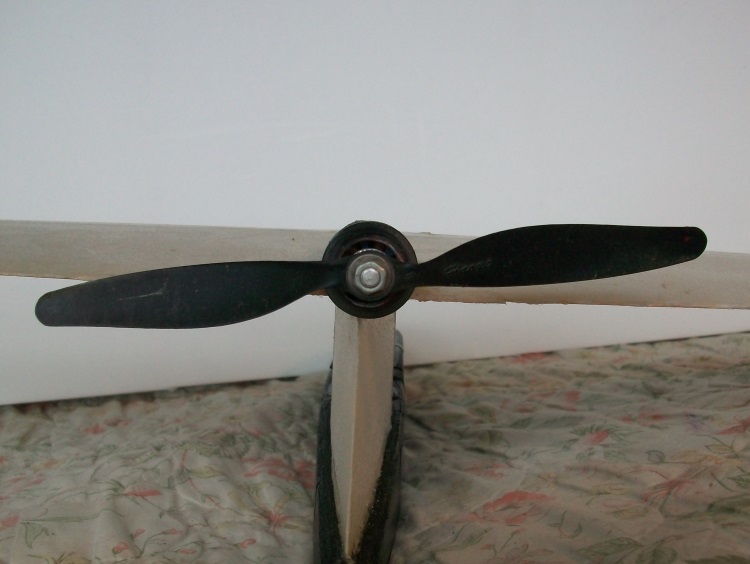
So far I have yet to make a conventional tractor 'power plane' design that is any more efficient overall than this type of 'pylon' wing pusher.
My own conclusion is that the reduction in the high speed prop wash over the airframe more or less offsets the loss in prop efficiency from it running in the wing turbulence.
But on the Endurance almost any drag reduction is likely to be worth while so on that the whole mount was made no larger than the motor bell itself.
Of course I no longer have it to picture the detail but my Lightweight has an identical motor and mounting, although it turns a 7x6 and runs on a 3s.
So far I have yet to make a conventional tractor 'power plane' design that is any more efficient overall than this type of 'pylon' wing pusher.
My own conclusion is that the reduction in the high speed prop wash over the airframe more or less offsets the loss in prop efficiency from it running in the wing turbulence.
Last edit: 14 Apr 2015 11:11 by Quorneng.
Thanks: Phil Wood, Klipkopwildlife, old fart, Ex-Member
Please Log in or Create an account to join the conversation.
- Klipkopwildlife
-
- Offline
- Administrator
-
- I'm supposed to be retired!
15 Apr 2015 10:15 #13
by Klipkopwildlife
Do it now, you may never get another chance
Replied by Klipkopwildlife on topic Endurance - again!
Interesting S, but do I recall that the diesel RC plane that crossed the Atlantic was tractor? Surely they would have researched that kind of thing?
Do it now, you may never get another chance
Please Log in or Create an account to join the conversation.
- Quorneng
-
Topic Author
- Offline
- Forum Master
-
Less
More
- Posts: 10058
- Thank you received: 19043
15 Apr 2015 12:31 #14
by Quorneng
Replied by Quorneng on topic Endurance - again!
In general an IC plane has to consider the effect of the reduction in fuel load. So unless you have positive inter tank pumping they have to be on or close to the CofG. This tends to mean that for best structural efficiency of the airframe the 'fixed' heavy bits are used to counter the weight of the tail assembly.
It follows that for a duration plane an IC pusher layout is likely be discounted on structural grounds alone.
Electric has no flight weight loss so different layouts can be used without the same penalty leaving just the difference in overall aerodynamic efficiency to make the selection.
I do wonder why Convair went to all the trouble of using pushers on the B36.
Was there an efficiency advantage in such a layout for an intercontinental bomber that did not have the benefit of in flight refuelling?
It follows that for a duration plane an IC pusher layout is likely be discounted on structural grounds alone.
Electric has no flight weight loss so different layouts can be used without the same penalty leaving just the difference in overall aerodynamic efficiency to make the selection.
I do wonder why Convair went to all the trouble of using pushers on the B36.
Was there an efficiency advantage in such a layout for an intercontinental bomber that did not have the benefit of in flight refuelling?
Thanks: Klipkopwildlife
Please Log in or Create an account to join the conversation.
- Quorneng
-
Topic Author
- Offline
- Forum Master
-
Less
More
- Posts: 10058
- Thank you received: 19043
15 Apr 2015 13:05 #15
by Quorneng
Replied by Quorneng on topic Endurance - again!
I have been doodling electronically trying to imagine a wing for the new endurance.
I still see a structural benefit in having a flat one piece centre section as it removes the need for a joint at the point of maximum bending stress.
However any sudden change in the wing section or plan form does generate additional losses. Maybe this is a factor in the surprising efficiency of the moulded foam wings. For a duration plane some degree of dihedral stability is an advantage to limit the quantity of control inputs .
So a compromise with a gentle change between the flat centre section and the outer panels but with modest progressive dihedral tips out board of the ailerons.

A relatively modest aspect ratio to give a generous wing area for the 48" span.
The final tweek which I have been anxious to try for some time is 'direct acting' servos (i.e. the aileron fixed directly to the servo arm) so there is no external linkage.
The task is to see how much less than 1000mAh (from a 5000mah battery) I can use during a 1 hour 'still air' flight.
I still see a structural benefit in having a flat one piece centre section as it removes the need for a joint at the point of maximum bending stress.
However any sudden change in the wing section or plan form does generate additional losses. Maybe this is a factor in the surprising efficiency of the moulded foam wings. For a duration plane some degree of dihedral stability is an advantage to limit the quantity of control inputs .
So a compromise with a gentle change between the flat centre section and the outer panels but with modest progressive dihedral tips out board of the ailerons.
A relatively modest aspect ratio to give a generous wing area for the 48" span.
The final tweek which I have been anxious to try for some time is 'direct acting' servos (i.e. the aileron fixed directly to the servo arm) so there is no external linkage.
The task is to see how much less than 1000mAh (from a 5000mah battery) I can use during a 1 hour 'still air' flight.
Thanks: Phil Wood, Klipkopwildlife
Please Log in or Create an account to join the conversation.
Time to create page: 0.538 seconds