
- Posts: 10058
- Thank you received: 19043
- Forum
- Forum Categories
- Building Threads.
- Prospective Builds / Build Ideas.
- A possible EDF DH Sea Vixen FAW2
A possible EDF DH Sea Vixen FAW2
- Quorneng
-
 Topic Author
- Offline
- Forum Master
-

Less
More
10 Jun 2017 01:36 #1
by Quorneng
A possible EDF DH Sea Vixen FAW2 was created by Quorneng
In Andy's profile/no cal Sea Vixen thread I grumbled that it would look much better with 3 dimensions.
This set me thinking about the possibility of building a companion to my EDF Venom which being super light for its 31.5" span flies very well despite its meager 40 mm 2s EDF. The small EDF allows true scale size inlets and exhaust to be used.
To the same scale a Sea Vixen would be rather bigger at 40.5" span.
A Google search found a nice big 3 view drawing so the first task is to 'clean up' the plan view to show just the true outlines.
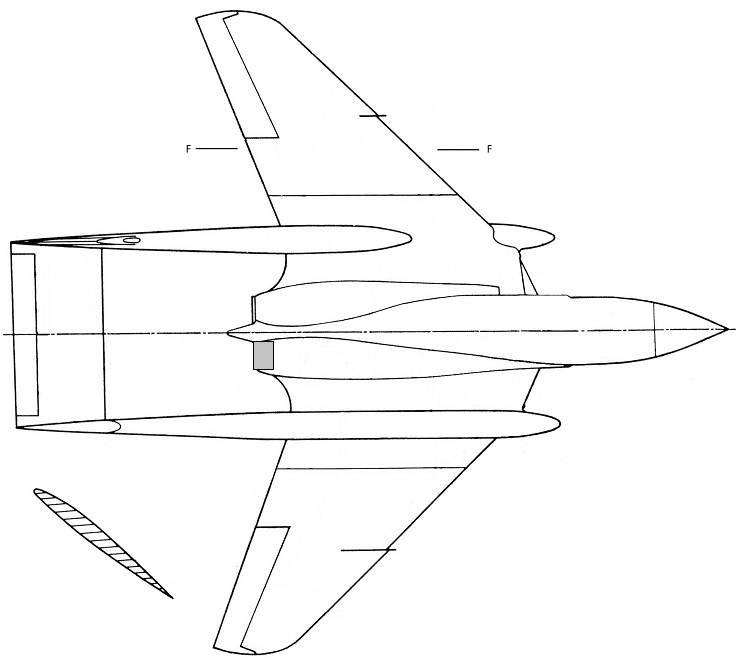
A 40 mm EDF is shown at the size to match a 42.5" span.
It is tiny! Just about the diameter of the scale jet pipe so no problem using scale inlets but it does mean the air frame will have to be extraordinarily light.
The Sea Vixen is quite a complex shape so a bit more "thinking" is required before I invest in the relatively expensive 40 mm EDFs. (With the exchange rate falling they ain't going to get any cheaper anytime soon!)
This set me thinking about the possibility of building a companion to my EDF Venom which being super light for its 31.5" span flies very well despite its meager 40 mm 2s EDF. The small EDF allows true scale size inlets and exhaust to be used.
To the same scale a Sea Vixen would be rather bigger at 40.5" span.
A Google search found a nice big 3 view drawing so the first task is to 'clean up' the plan view to show just the true outlines.
A 40 mm EDF is shown at the size to match a 42.5" span.
It is tiny!
Just about the diameter of the scale jet pipe so no problem using scale inlets but it does mean the air frame will have to be extraordinarily light. The Sea Vixen is quite a complex shape so a bit more "thinking" is required before I invest in the relatively expensive 40 mm EDFs. (With the exchange rate falling they ain't going to get any cheaper anytime soon!)
Thanks: Klipkopwildlife, Ralpharr2001, boz, Firewood, Nigel, Squirrelnet
Please Log in or Create an account to join the conversation.
- Quorneng
-
Topic Author
- Offline
- Forum Master
-
Less
More
- Posts: 10058
- Thank you received: 19043
10 Jun 2017 12:48 - 10 Jun 2017 12:49 #2
by Quorneng
Replied by Quorneng on topic A possible EDF DH Sea Vixen FAW2
The next issue is the 40 mm AEO EDFs themselves.
They used to make them with a motor like this (and this is the type I have used on all my micro EDFs so far).
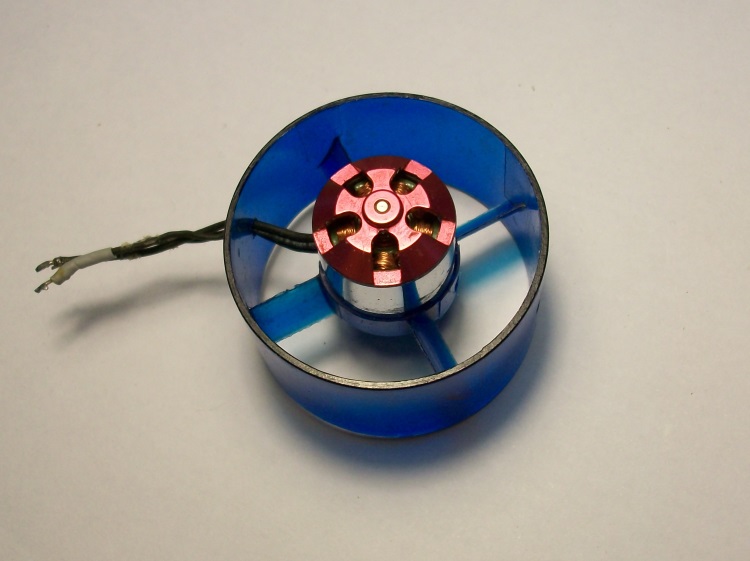
but now they are like this
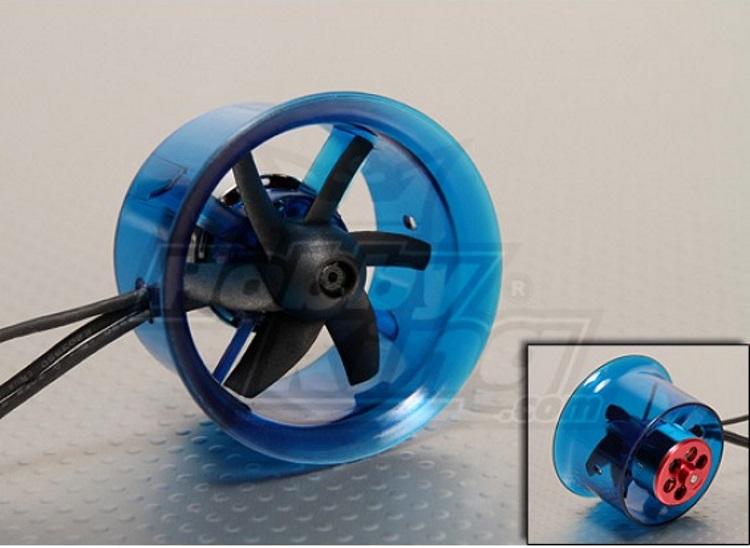
I can understand why they made the change as the smaller motors were rated for 2s maximum and as everybody tried to run them of 3s the fans got a reputation for being low powered and unreliable! On the other hand having a motor bell that is larger than the fan hub diameter does rather offend my sense of aerodynamics. To make matters worse the new motors are a bit heavier as well.
So the options are:
1. Use the new (but slightly less efficient) 40 mm EDFs in a 42.5 span air frame that matches the scale of my Venom.
2. Reduce the size of the air frame so the true exhaust area of the new EDFs exactly matches a smaller air frame. It would be about 36" span.
3. Squeeze bigger 50 mm EDFs into the 42.5" span air frame. They would just about fit but as they are 3.5 times the weight the resulting plane would have to built heavier meaning it would have to use a much bigger heavier 3s battery. I am sure it would fly fine but the result would really no longer be in the same 'big and light' micro EDF class as the Venom.
Like i said "a bit more thinking".
They used to make them with a motor like this (and this is the type I have used on all my micro EDFs so far).
but now they are like this
I can understand why they made the change as the smaller motors were rated for 2s maximum and as everybody tried to run them of 3s the fans got a reputation for being low powered and unreliable! On the other hand having a motor bell that is larger than the fan hub diameter does rather offend my sense of aerodynamics.
To make matters worse the new motors are a bit heavier as well.So the options are:
1. Use the new (but slightly less efficient) 40 mm EDFs in a 42.5 span air frame that matches the scale of my Venom.
2. Reduce the size of the air frame so the true exhaust area of the new EDFs exactly matches a smaller air frame. It would be about 36" span.
3. Squeeze bigger 50 mm EDFs into the 42.5" span air frame. They would just about fit but as they are 3.5 times the weight the resulting plane would have to built heavier meaning it would have to use a much bigger heavier 3s battery. I am sure it would fly fine but the result would really no longer be in the same 'big and light' micro EDF class as the Venom.
Like i said "a bit more thinking".
Last edit: 10 Jun 2017 12:49 by Quorneng.
Thanks: Klipkopwildlife, boz, Firewood
Please Log in or Create an account to join the conversation.
- Ex-Member
- Visitor
-

10 Jun 2017 14:36 #3
by Ex-Member
Replied by Ex-Member on topic A possible EDF DH Sea Vixen FAW2
Personally, Q, I'd go for option 1. I don't believe the loss of thrust to be that significant and anyway, you don't appear to be after excessive performance. It's one of those 'lighter is better' arguments for me....
Your choice in the end, but either way, good luck with the model.
Your choice in the end, but either way, good luck with the model.
Please Log in or Create an account to join the conversation.
- Nigel
- Offline
- Elite Member
-

Less
More
- Posts: 204
- Thank you received: 405
10 Jun 2017 23:51 #4
by Nigel
Replied by Nigel on topic A possible EDF DH Sea Vixen FAW2
Can you source different motors to fit to the fan units? There is a vast range at HK plus other places. Difficult knowing the true quality of any particular motor unfortunately, I have personal experience of HK deleting less than favourable reviews. Equally bad, by the time I've ever needed a replacement for something that turned out 'good', the range has moved on. Anything on other forums about re-motoring?
I'm with you on the aerodynamics - motor blocking the fan duct and the bluff posterior - they don't have so much power they can squander it so lightly.
Either way, good luck and keep the photos coming!
I'm with you on the aerodynamics - motor blocking the fan duct and the bluff posterior - they don't have so much power they can squander it so lightly.
Either way, good luck and keep the photos coming!
Thanks: boz, Firewood
Please Log in or Create an account to join the conversation.
- Quorneng
-
Topic Author
- Offline
- Forum Master
-
Less
More
- Posts: 10058
- Thank you received: 19043
11 Jun 2017 01:23 #5
by Quorneng
Replied by Quorneng on topic A possible EDF DH Sea Vixen FAW2
Thanks for the comments.
I am pretty sure re-motoring those particular AEO fans is a non starter as nothing is screwed together - it is simply glued. Even the fans are just a tight push fit on the motor shaft. It is all part of the reason why these particular fans are so light.
I have done some more calculations
The 'small motor' 40 mm EDFs have an actual FSA of 1103 sqmm.
The current 40 mm EDFs actually use the identical fan but the bigger diameter motor bell reduces the duct orifice area to 979 sq mm, a reduction of 12%!
Testing by others has shown that this sort of area reduction in the exhaust nozzle can slightly increase the static thrust as well as the exhaust velocity but definitely not when exhausting over a large diameter bluff end motor bell!
One solution to this issue is to use a fixed cone behind the motor bell to gradually achieve a simple circular duct but at the same time keeping the duct area constant.
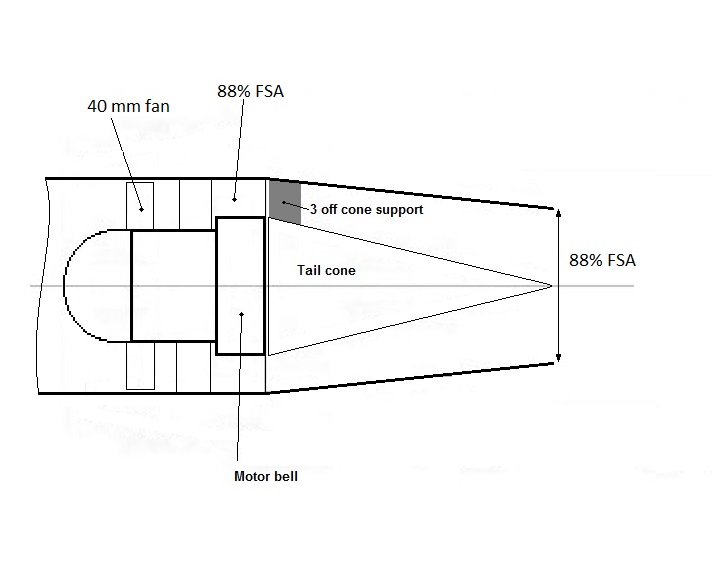
In this configuration the actual nozzles will be 35 mm diameter. A Sea Vixen with this size nozzle would have a span of 37.5". It would thus be at a slightly smaller scale than my Venom but on the other hand it would make best use of the current 40 mm AEO EDFs.
I am pretty sure re-motoring those particular AEO fans is a non starter as nothing is screwed together - it is simply glued. Even the fans are just a tight push fit on the motor shaft. It is all part of the reason why these particular fans are so light.
I have done some more calculations
The 'small motor' 40 mm EDFs have an actual FSA of 1103 sqmm.
The current 40 mm EDFs actually use the identical fan but the bigger diameter motor bell reduces the duct orifice area to 979 sq mm, a reduction of 12%!
Testing by others has shown that this sort of area reduction in the exhaust nozzle can slightly increase the static thrust as well as the exhaust velocity but definitely not when exhausting over a large diameter bluff end motor bell!
One solution to this issue is to use a fixed cone behind the motor bell to gradually achieve a simple circular duct but at the same time keeping the duct area constant.
In this configuration the actual nozzles will be 35 mm diameter. A Sea Vixen with this size nozzle would have a span of 37.5". It would thus be at a slightly smaller scale than my Venom but on the other hand it would make best use of the current 40 mm AEO EDFs.
Thanks: Klipkopwildlife, boz, Firewood
Please Log in or Create an account to join the conversation.
- Quorneng
-
Topic Author
- Offline
- Forum Master
-
Less
More
- Posts: 10058
- Thank you received: 19043
12 Jun 2017 23:57 - 13 Jun 2017 00:01 #6
by Quorneng
Replied by Quorneng on topic A possible EDF DH Sea Vixen FAW2
Just before I went any further I tried 'printing' a suitable exhaust duct and inner cone. It seemed a suitable use (or maybe waste!) of my time as, if it works, it will be simple to make the second one!
After about 10 trial goes. :
:
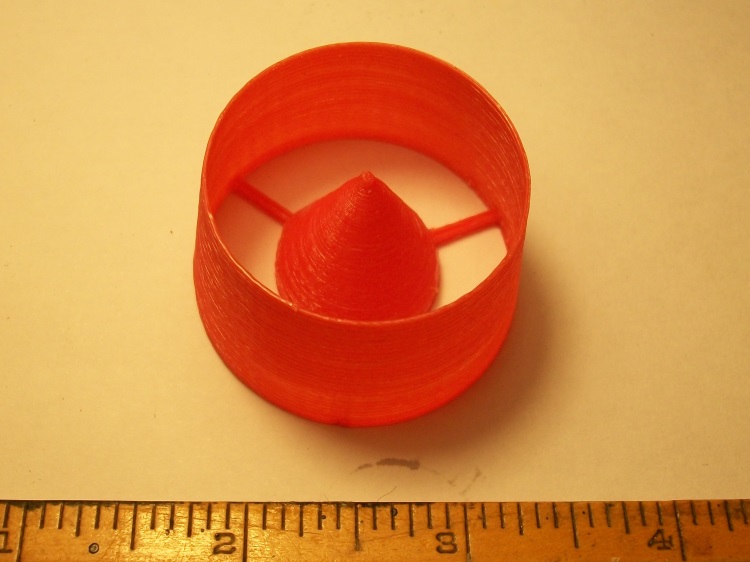
It is printed in two pieces (inner and outer cones) using the 'spiralize single wall' feature which prints a cone in one continuous pass which gives a good surface.
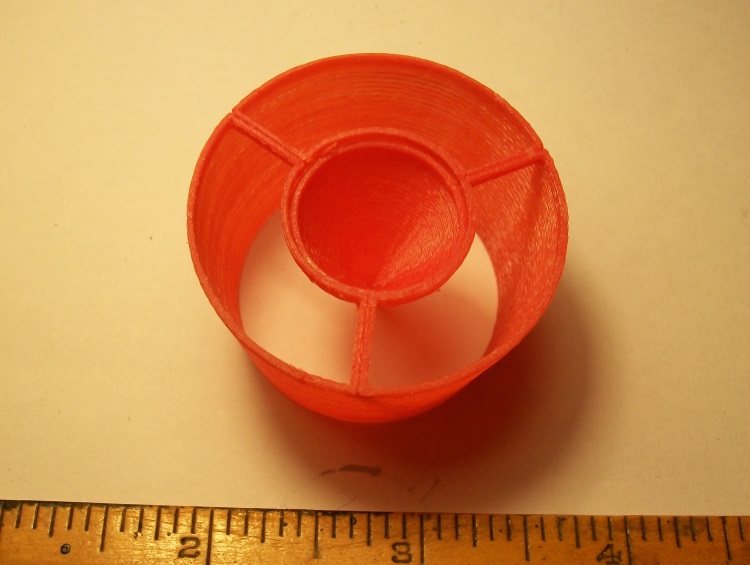
Of course with printing it is relatively easy to adjust any dimension as required.
It weighs 2.2g and takes 12 minutes to print both parts.
I suppose the next step is to order the fans and get a sheet of 2mm Depron from Webbies. .
After about 10 trial goes.
:
It is printed in two pieces (inner and outer cones) using the 'spiralize single wall' feature which prints a cone in one continuous pass which gives a good surface.
Of course with printing it is relatively easy to adjust any dimension as required.
It weighs 2.2g and takes 12 minutes to print both parts.
I suppose the next step is to order the fans and get a sheet of 2mm Depron from Webbies.
.
Last edit: 13 Jun 2017 00:01 by Quorneng.
Thanks: Klipkopwildlife, Ex-Member, boz, Firewood
Please Log in or Create an account to join the conversation.
- Quorneng
-
Topic Author
- Offline
- Forum Master
-
Less
More
- Posts: 10058
- Thank you received: 19043
13 Jun 2017 17:14 #7
by Quorneng
Replied by Quorneng on topic A possible EDF DH Sea Vixen FAW2
The next factor to consider is the wing root inlets.
Ideally the inlet duct should be the same area as the EDF case which is 1357 sq mm for a 40 mm 'tube'. This will make the inlet duct 25% bigger than the FSA and no less than 39 % bigger than the restriction caused by the size of the motor bell.
Such a 'generous' inlet area should help reduce the duct losses and maintain the static thrust. The downside is that if a true scale inlet is maintained the plane comes out quite big for the size of its EDFs and the exhaust nozzle is a bit under size.
This is only to be expected as on a typical 'fast jet' the inlet area is quite a bit smaller than the exhaust nozzle which unfortnately is the exact opposite of what is required for an EDF!
So setting the area of each scale inlet to 1357 sq mm will result in a wing span of 1118 mm (44") which is pretty big for a plane that should weigh no more than 450g (16 oz), indeed it will have to weigh no more than that as I doubt the total thrust will be much above 230g!
Fans, ESCs and servos are now ordered.
Ideally the inlet duct should be the same area as the EDF case which is 1357 sq mm for a 40 mm 'tube'. This will make the inlet duct 25% bigger than the FSA and no less than 39 % bigger than the restriction caused by the size of the motor bell.
Such a 'generous' inlet area should help reduce the duct losses and maintain the static thrust. The downside is that if a true scale inlet is maintained the plane comes out quite big for the size of its EDFs and the exhaust nozzle is a bit under size.
This is only to be expected as on a typical 'fast jet' the inlet area is quite a bit smaller than the exhaust nozzle which unfortnately is the exact opposite of what is required for an EDF!
So setting the area of each scale inlet to 1357 sq mm will result in a wing span of 1118 mm (44") which is pretty big for a plane that should weigh no more than 450g (16 oz), indeed it will have to weigh no more than that as I doubt the total thrust will be much above 230g!
Fans, ESCs and servos are now ordered.
Thanks: Ex-Member, Firewood
Please Log in or Create an account to join the conversation.
- Eric
-

- Offline
- Moderator
-

Less
More
- Posts: 15406
- Thank you received: 14306
13 Jun 2017 22:08 #8
by Eric
if you are calm and collected when all about you are going berserk - you've missed something important!
Replied by Eric on topic A possible EDF DH Sea Vixen FAW2
Additional 'cheat' inlets on the underside in front of the fans?
A lot of foamy scaleish edf's use this method of getting enough air in.
A lot of foamy scaleish edf's use this method of getting enough air in.
if you are calm and collected when all about you are going berserk - you've missed something important!
Thanks: Firewood
Please Log in or Create an account to join the conversation.
- Quorneng
-
Topic Author
- Offline
- Forum Master
-
Less
More
- Posts: 10058
- Thank you received: 19043
15 Jun 2017 00:16 #9
by Quorneng
Replied by Quorneng on topic A possible EDF DH Sea Vixen FAW2
Certainly cheat holes is one way of doing it but the intention behind a 'big and light' EDF is that the scale inlets are big enough - even if the exhaust comes out under size.
Thanks: Eric
Please Log in or Create an account to join the conversation.
- Quorneng
-
Topic Author
- Offline
- Forum Master
-
Less
More
- Posts: 10058
- Thank you received: 19043
15 Jun 2017 13:32 - 15 Jun 2017 13:36 #10
by Quorneng
Replied by Quorneng on topic A possible EDF DH Sea Vixen FAW2
Andy very kindly emailed me a nice 4 view of a Sea Vixen which gave me rather better detail of the inlet.
Using this it looks like I could build a Sea Vixen to exactly the same scale as my Venom which will give it a span of 41.25 " compared to the Venom's 31.25".
According to the Andy's 4 view each inlet will then have an area of 1120 sq mm which is just a touch bigger than the 1103 FSA of the 40 mm fan so should be acceptable.
I have also found this interesting view looking up the tail pipe.
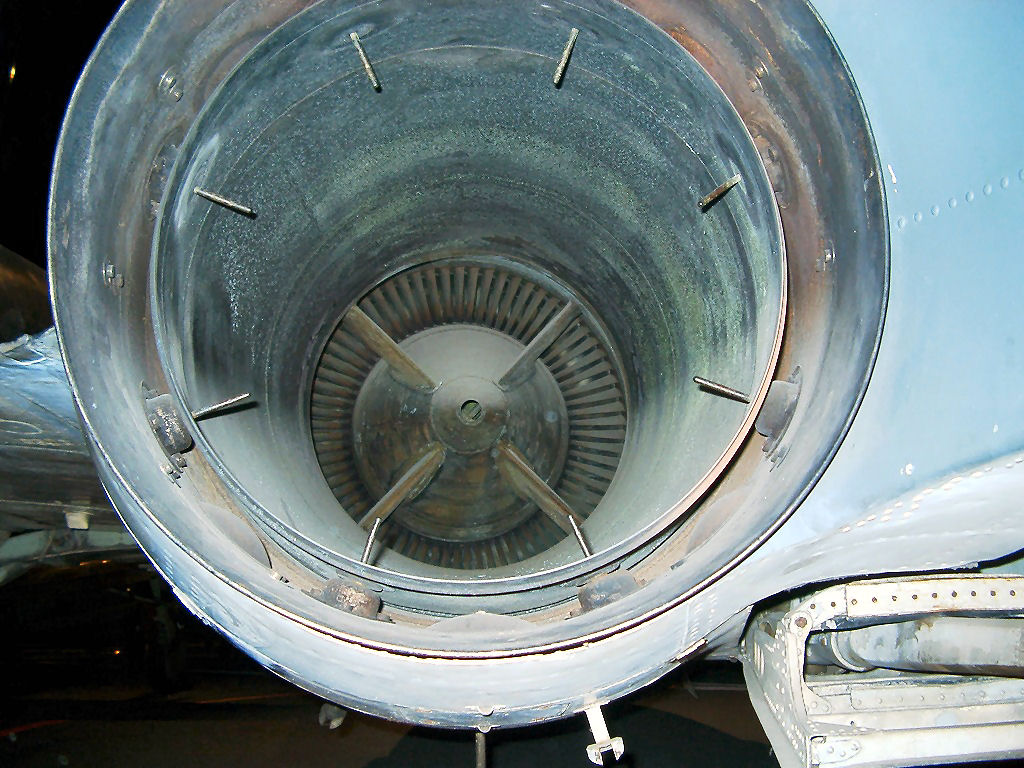
Note the exhaust has an external shroud, presumably for cooling, so my 35 mm dia exhaust would not be as much under size as I originally thought!
Using this it looks like I could build a Sea Vixen to exactly the same scale as my Venom which will give it a span of 41.25 " compared to the Venom's 31.25".
According to the Andy's 4 view each inlet will then have an area of 1120 sq mm which is just a touch bigger than the 1103 FSA of the 40 mm fan so should be acceptable.
I have also found this interesting view looking up the tail pipe.
Note the exhaust has an external shroud, presumably for cooling, so my 35 mm dia exhaust would not be as much under size as I originally thought!
Last edit: 15 Jun 2017 13:36 by Quorneng.
Thanks: Klipkopwildlife, blue123, Ex-Member, Firewood
Please Log in or Create an account to join the conversation.
- Quorneng
-
Topic Author
- Offline
- Forum Master
-
Less
More
- Posts: 10058
- Thank you received: 19043
16 Jun 2017 14:52 - 16 Jun 2017 14:54 #11
by Quorneng
Replied by Quorneng on topic A possible EDF DH Sea Vixen FAW2
The more I look at the Sea Vixen the more complex it becomes.
There is this rather "Heath Robinson" hot air windscreen clean vision and demisting system fed from the Avons that was clearly 'added on' rather than being built in.
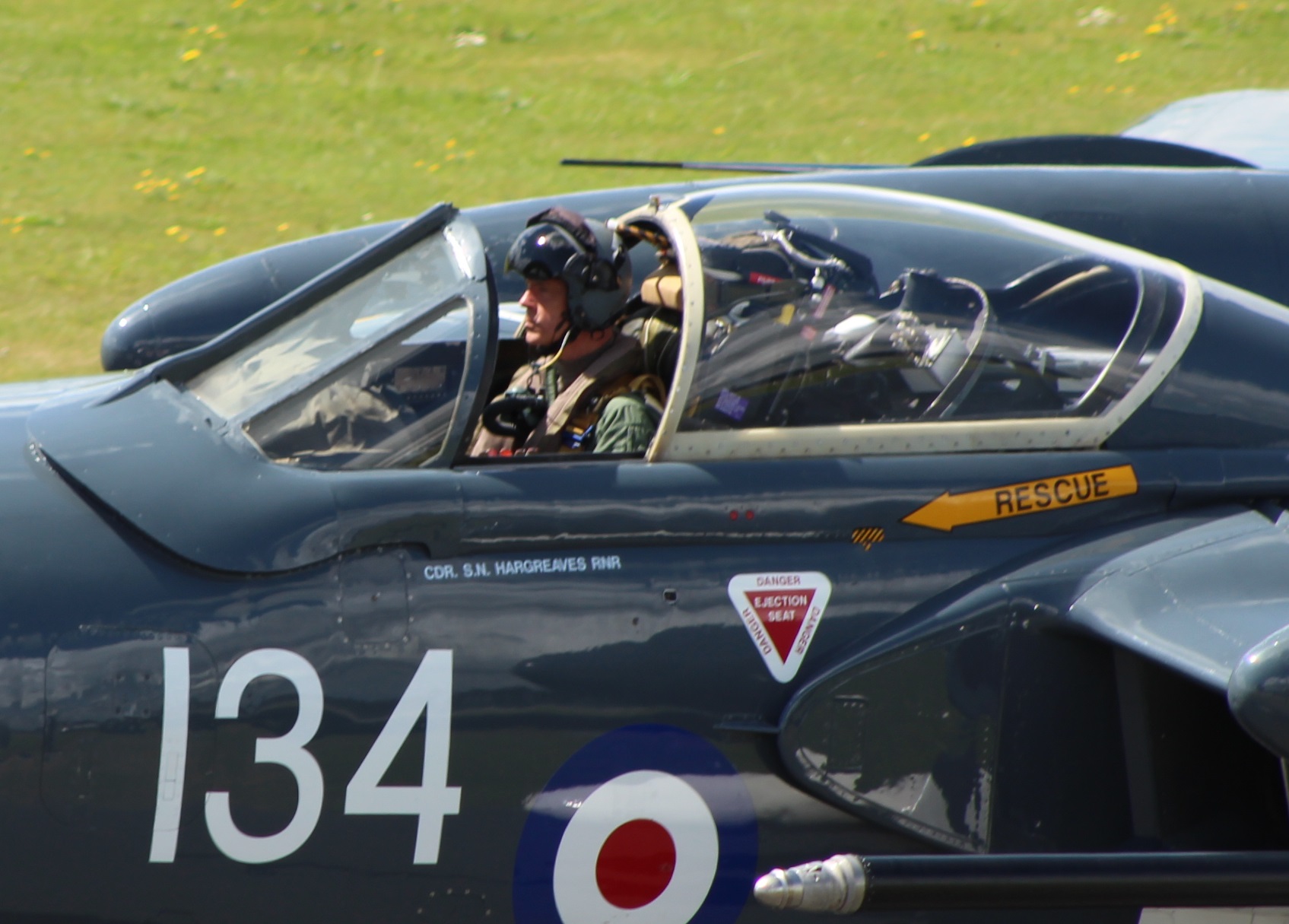
Then there is a complex shaped air intake faired into either side of the fuselage
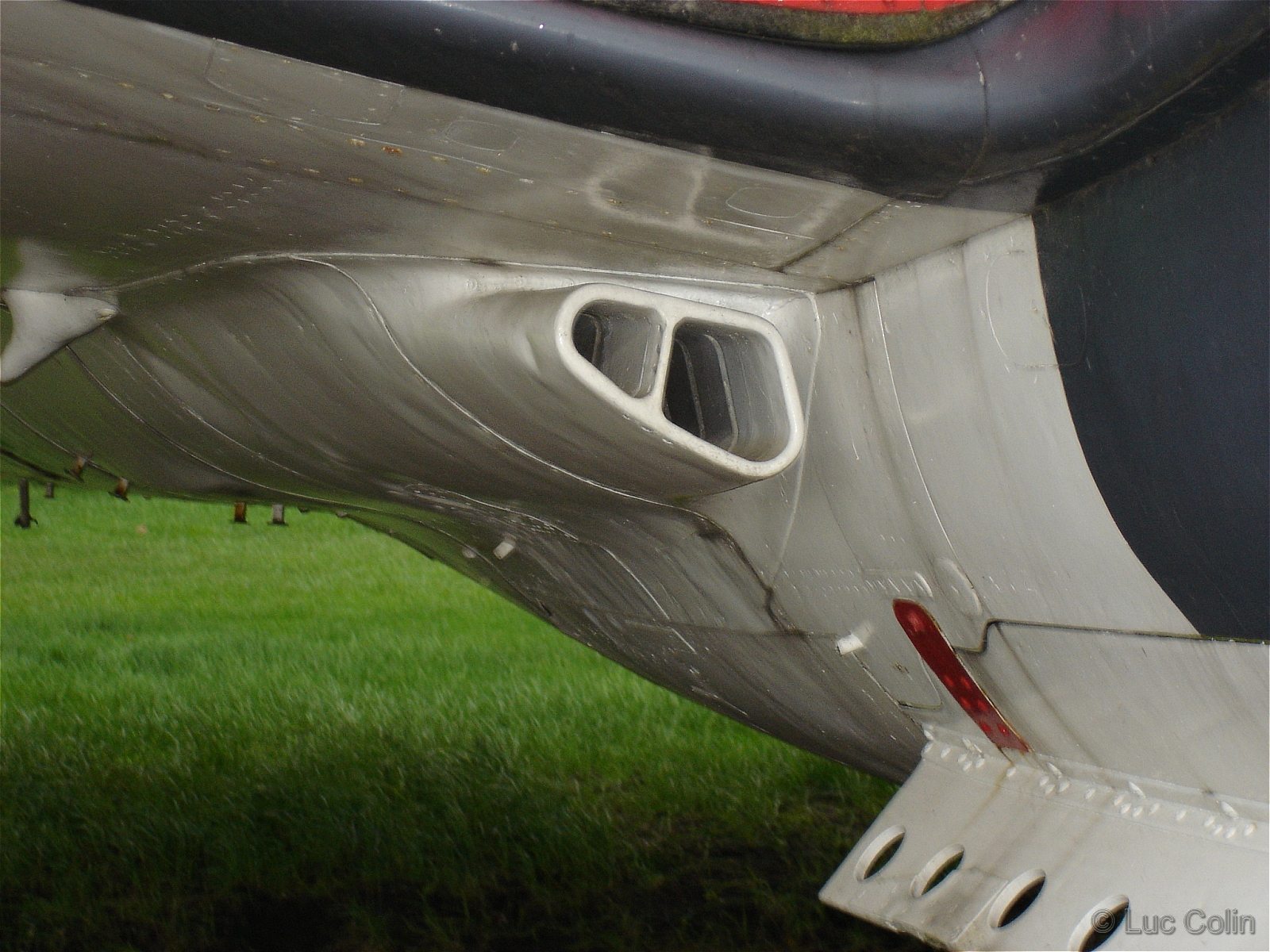
And that "bridge girder" beam fixed to the fuselage is the external stiffening member for the under fuselage air brake!
It would appear when in service 'delicate' was not really a feature of the Sea Vixen..
There is this rather "Heath Robinson" hot air windscreen clean vision and demisting system fed from the Avons that was clearly 'added on' rather than being built in.
Then there is a complex shaped air intake faired into either side of the fuselage
And that "bridge girder" beam fixed to the fuselage is the external stiffening member for the under fuselage air brake!
It would appear when in service 'delicate' was not really a feature of the Sea Vixen.
.
Last edit: 16 Jun 2017 14:54 by Quorneng.
Thanks: Klipkopwildlife, Ex-Member
Please Log in or Create an account to join the conversation.
- Eric
-
- Offline
- Moderator
-
Less
More
- Posts: 15406
- Thank you received: 14306
16 Jun 2017 21:19 #12
by Eric
if you are calm and collected when all about you are going berserk - you've missed something important!
Replied by Eric on topic A possible EDF DH Sea Vixen FAW2
I know the sea-going Vixens had a hard life, but I don't recall them being THAT battered! ![[badass]](/media/kunena/emoticons/bad_boys_20.gif "[badass]")
I'd suggest those photo's (except the crewed up one!) were taken at the DH museum at Hatfield, because the aircraft looks really rough, as a lot of the exhibits were, when I was there, having been stored outside. That pipe, bottom right under the exhaust duct, with the monster dent in it, would have been scrapped, as would the sensor? that is bent 90' inside the duct.
I'd suggest those photo's (except the crewed up one!) were taken at the DH museum at Hatfield, because the aircraft looks really rough, as a lot of the exhibits were, when I was there, having been stored outside. That pipe, bottom right under the exhaust duct, with the monster dent in it, would have been scrapped, as would the sensor? that is bent 90' inside the duct.
if you are calm and collected when all about you are going berserk - you've missed something important!
Please Log in or Create an account to join the conversation.
- Quorneng
-
Topic Author
- Offline
- Forum Master
-
Less
More
- Posts: 10058
- Thank you received: 19043
29 Jun 2017 23:19 - 29 Jun 2017 23:26 #13
by Quorneng
Replied by Quorneng on topic A possible EDF DH Sea Vixen FAW2
At last the 40 mm EDFs have arrived from China, via the Netherlands, with a yellow sticky label attached that says: "b]Goods not fulfilling the conditions laid down by Articles 28 &29 of the Treaty on the functioning of the European Union[/b]". Never had anything like that before. The first tangible signs of Brexit?
Apart from the bigger diameter motors, 23 mm instead of 18, they do have nice 8 blade fans.
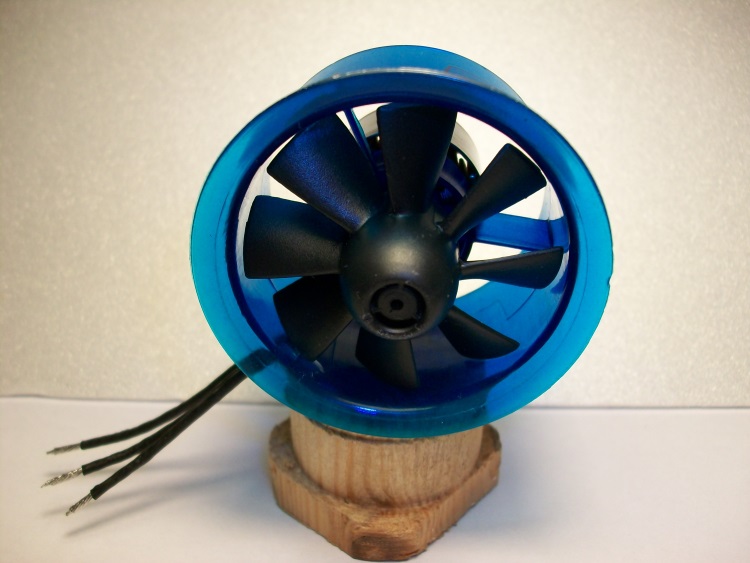
However the bluff end of the motor bell is very obvious and makes up significant proportion of the duct area.
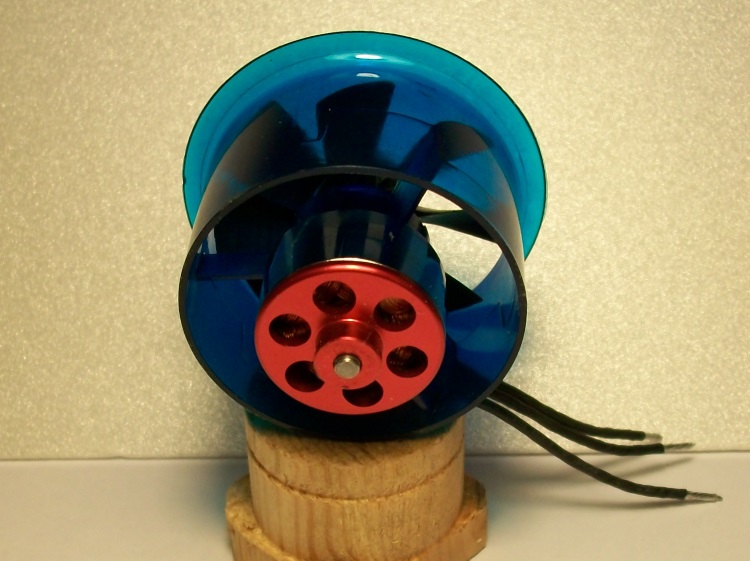
The inner body that 'streamlines' the flow behind the motor bell
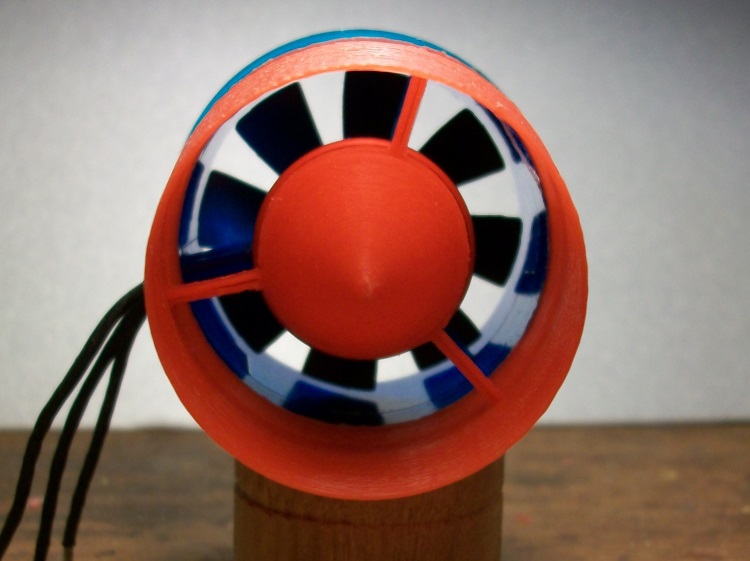
The tapered thrust tube. In conjunction with the the inner body it maintains a constant duct area from the 'annulus' around the motor bell to the circular exhaust nozzle.
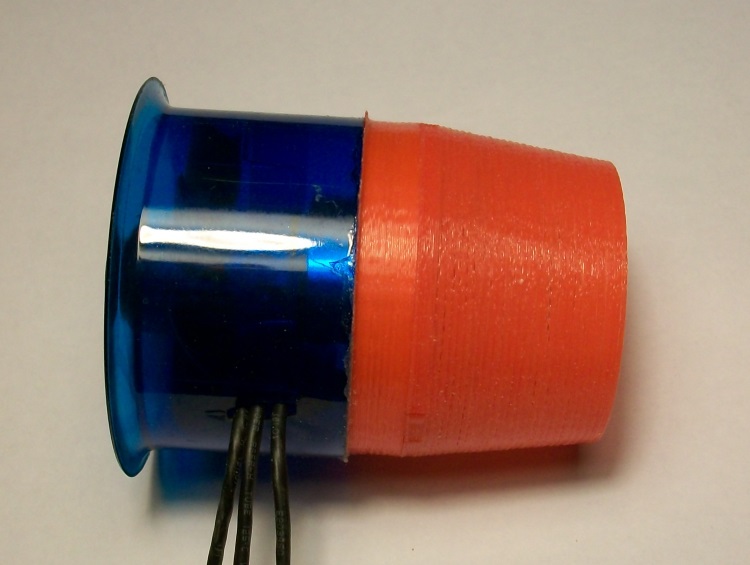
The complete exhaust tube printed in PLA weighs just 2.9 g.
No testing yet but the hope is that having an inner body will improve the airflow such that it fully compensates for the losses caused by the exhaust duct itself.
The fan draws just under 13A on a 2s giving 89W.
Even with two EDFs such a modest power output suggests the Sea vixen will have to be really light
Apart from the bigger diameter motors, 23 mm instead of 18, they do have nice 8 blade fans.
However the bluff end of the motor bell is very obvious and makes up significant proportion of the duct area.
The inner body that 'streamlines' the flow behind the motor bell
The tapered thrust tube. In conjunction with the the inner body it maintains a constant duct area from the 'annulus' around the motor bell to the circular exhaust nozzle.
The complete exhaust tube printed in PLA weighs just 2.9 g.
No testing yet but the hope is that having an inner body will improve the airflow such that it fully compensates for the losses caused by the exhaust duct itself.
The fan draws just under 13A on a 2s giving 89W.
Even with two EDFs such a modest power output suggests the Sea vixen will have to be really light
Last edit: 29 Jun 2017 23:26 by Quorneng.
Thanks: Eric, Klipkopwildlife, Ex-Member, Ralpharr2001, boz, Squirrelnet
Please Log in or Create an account to join the conversation.
- Eric
-
- Offline
- Moderator
-
Less
More
- Posts: 15406
- Thank you received: 14306
30 Jun 2017 10:33 #14
by Eric
if you are calm and collected when all about you are going berserk - you've missed something important!
Replied by Eric on topic A possible EDF DH Sea Vixen FAW2
Don't forget to leave vent holes for the cooling airflow through the motor, Q!
if you are calm and collected when all about you are going berserk - you've missed something important!
Please Log in or Create an account to join the conversation.
- Quorneng
-
Topic Author
- Offline
- Forum Master
-
Less
More
- Posts: 10058
- Thank you received: 19043
30 Jun 2017 23:50 - 30 Jun 2017 23:57 #15
by Quorneng
Replied by Quorneng on topic A possible EDF DH Sea Vixen FAW2
On these EDFs motor cooling relies on the fact that the outer surface of the motor bell is in direct contact with the fan air stream as well as any air 'ejected' by the fast spinning motor.
There again with only 90 W max input I doubt if more than 20 W of heat has to be dissipated by the motor.
The ESCs are a bit more of a concern. My preferred option is to mount the 'bare' ESC heat sink flush with inner surface of the inlet duct to give maximum cooling with no drag penalty.
A quick test shows that the 40 EDF with the exhaust duct generates 141 gm (5 oz) thrust with a 2s. .This is virtually idenntical to the thrust generated by a bare EDF. .
There again with only 90 W max input I doubt if more than 20 W of heat has to be dissipated by the motor.
The ESCs are a bit more of a concern. My preferred option is to mount the 'bare' ESC heat sink flush with inner surface of the inlet duct to give maximum cooling with no drag penalty.
A quick test shows that the 40 EDF with the exhaust duct generates 141 gm (5 oz) thrust with a 2s. .This is virtually idenntical to the thrust generated by a bare EDF.
.
Last edit: 30 Jun 2017 23:57 by Quorneng.
Thanks: Eric, boz
Please Log in or Create an account to join the conversation.
- Forum
- Forum Categories
- Building Threads.
- Prospective Builds / Build Ideas.
- A possible EDF DH Sea Vixen FAW2
Time to create page: 0.588 seconds