
- Posts: 7
- Thank you received: 7
Receivers, and Other Questions
- paulcurtis
- Topic Author
- Offline
- New Member
-

Less
More
31 Aug 2023 19:39 #1
by paulcurtis
Receivers, and Other Questions was created by paulcurtis
Hello All,
New member here and I am hoping you can help. After about forty years since I last made a RC plane, I have got back into it again. I've made a couple of rubber powered F/F models, and have now joined a club to get back into R/C.
I have acquired a Spektrum DX8e, and a compatible buddy box. I intend to build what looks like a stable and robust trainer to get me started. I think I'll go for ST Models Discovery . That seems to come with most things, bar receiver, LiPo and a charger.
I am beginning to get my head around some of the abbreviations, but what I am confused about is the receiver. I want a six channel that supports DSMX like THIS .
A couple of questions please:
Why do the receivers vary so much in price? Is it features, size/weight, or range? Would the one above suit a beginner like me?
Are the connectors pretty standard? Can I be sure my LiPo will fit the receiver, and a 240v charger will connect OK? Are there any gotchas?
Thanks in advance for your help.
Thanks: Klipkopwildlife
Please Log in or Create an account to join the conversation.
- Eric
-

- Offline
- Moderator
-

Less
More
- Posts: 13726
- Thank you received: 14470
31 Aug 2023 21:08 - 31 Aug 2023 21:34 #2
by Eric
if you are calm and collected when all about you are going berserk - you've missed something important!
Replied by Eric on topic Receivers, and Other Questions
Welcome to the happy (small) crowd on here. We seem to be going through a quiet spell just now.
The model you suggest looks ok, but I don't know it, as I've not met one yet.
When it comes to radio equipment, a lot of people sneer at Spektrum. Earlier models were suspect for quality.
You need to be aware that if it requires servicing or repairs, it has to be sent off to Germany, as there is no UK base any more.
I use Futaba and Taranis radios, myself, so am naturally biased towards recommending those! Futaba are quality but expensive.
Taranis, and it's recent cousin Radiomaster are proving to be very reliable kit that won't break the bank!
Unless you get a multi-standard transmitter, you HAVE to get the correct reciever to work with it. They all use different protocols (like languages), so won't work with each other.
All servos, speed controllers, etc, have a common standard for plugs and sockets, unless you go for something really exotic, which would be a waste of money until you have learned to NOT crash too often!
When it comes to battery connectors - that can be a can of worms. Some batteries are sold without any connector, just bare wires, others have the Deans, and still others have the XT series. They are NOT inter-connectable unless you make up a patch lead from one plug to the other socket (learn to solder!)
The same with lipo chargers. You can get them just for 240v, but then you can't use it on the field, so you have to take a bag of charged batteries with you - or you can get a 12v dc/240v ac unit, in which case you can charge your flight battery from your car battery - or preferably a spare 12v battery! (then you won't need a jump-start so you can go home!) Again, make sure the plug on the charger matches the plug on your flight battery.
If you get a higher quality charger, it will charge flight packs up to about 22v, and also your radio transmitter pack, and miscellaneous gadgets - not all at the same time!
When it comes to gadgets, although not essential, it helps you to know what is happening with your batteries - things like a battery checker shows how much charge is left in the battery, and a Wattmeter - only used for testing and checking at home, on the bench - tells you how much power the motor and prop combo is drawing from the battery.
A timer of some description is a good thing to have, as well, as it warns you - assuming you set it correctly - how long you have been flying, so it is time to land. (You have to find that out by trial and error!) Some radio transmitters have it built in - if not a clockwork kitchen timer is perfectly adequate. You don't need precision to the nearest tenth of a second - just something that makes a noise you can hear!
Some recievers have telemetry in-built, or as plug-in modules, that can track your flight pack voltage while you are flying, and warn you when the level is getting down before the power runs out!
Most speed controllers will do that, sort-of, as well - they will turn the motor off when the battery level drops below a certain amount, but the radio will still function so you still have flight surface control.
It is not advisable to let your battery get that low, though,
Learning to fly with electric AND radio is a pretty steep learning curve, at first. I'm pleased that you have joined a club, that can save you a lot of heartache and expense.
Safety is critical with electric models. If/when you are fiddling or testing - TAKE THE PROP OFF - then the model cannot suddenly and unexpectedly shoot off across the room, chopping your fingers, the table, house-plants, or the pet cat as it goes! The motor will just whizz harmlessly. Unlike a small i/c engine, an electric motor will not stop until you turn it off.
Lipo batteries have a lot of scare-stories to go with them, but under normal use, charged at the correct voltage and rate, with the correct charger, they are pretty harmless, providing you don't do anything silly with them! They pack a LOT of power into a small space. (a three cell lipo can start your car - once!) If you manage to crash the model, and the battery gets damaged in any way, put it in a safe place, and DO NOT use it again. You will learn there are ways of safely discharging and disposal of them - don't just chuck it into the domestic rubbish bin!
Do NOT charge the battery(s) in the model or in the house, where there are flammable objects. I know I just said they are safe - but there's always a rogue! Don't 'chance it for once'.
I presume you have BMFA or similar insurance as well, for just in case!
Whereabouts in the country are you? I'm in Cheshire,
if you are calm and collected when all about you are going berserk - you've missed something important!
Last edit: 31 Aug 2023 21:34 by Eric. Reason: typos and added a bit
Thanks: Klipkopwildlife, jon.in.swansea, paulcurtis
Please Log in or Create an account to join the conversation.
- paulcurtis
- Topic Author
- Offline
- New Member
-
Less
More
- Posts: 7
- Thank you received: 7
31 Aug 2023 21:25 - 31 Aug 2023 21:26 #3
by paulcurtis
Replied by paulcurtis on topic Receivers, and Other Questions
Hi Eric, thank you so much for that very prompt and comprehensive reply. I will be sure to bear these in mind. I already have the Spektrum DX8e, so I will be using that at least to start with. I know the Futaba uses channel hopping to reduce interference, but as a starter it was very expensive.
Yes, I am a BMFA and CAA member. I am near Chichester, and joined that local club.
Yes, I am a BMFA and CAA member. I am near Chichester, and joined that local club.
Last edit: 31 Aug 2023 21:26 by paulcurtis.
Thanks: Eric, Klipkopwildlife
Please Log in or Create an account to join the conversation.
- Eric
-
- Offline
- Moderator
-
Less
More
- Posts: 13726
- Thank you received: 14470
31 Aug 2023 21:35 #4
by Eric
if you are calm and collected when all about you are going berserk - you've missed something important!
Replied by Eric on topic Receivers, and Other Questions
Note that I added a bit to the original text.
if you are calm and collected when all about you are going berserk - you've missed something important!
Please Log in or Create an account to join the conversation.
- Quorneng
-

- Offline
- Forum Master
-

Less
More
- Posts: 9436
- Thank you received: 19043
31 Aug 2023 22:59 - 31 Aug 2023 23:01 #5
by Quorneng
Replied by Quorneng on topic Receivers, and Other Questions
paul
The DX8e uses the Spektrum DXM2 or DSMX protocols interchangeably. Both are channel hopping systems. DSM2 only hops between 2 frequencies. It was found to be more likely to suffer from interference on a busy field.
DSMX is more sophisticated with a "listen before hopping" to ensure the next frquency is clear, if not it selects another and so on. All this take splace in a fraction of a second. It has been shown to operate faultlessly with 50 planes all using DSMX at the same time.
The Spektrum protocol is a registered trade mark and the owners Horizon Hobbies protect it vogorously as a result true Spextrum receivers tend to be expensive.
There are a whole series of 'look a likes' (Orange, Lemon & Redcon to name just a few) but they have to state the receiver is not a Spektrum product and does not use Spektrum design features.They are significantly cheaper.
In my own experience (Lemon in particular) work just as well as and have the same features as the equivalent Spektrum product. It is a matter of choice but then most of my planes are cheap enough for me to risk crashing whether by pilot error, bad luck or the radio. Most is from pilot error!

.
. . .
The DX8e uses the Spektrum DXM2 or DSMX protocols interchangeably. Both are channel hopping systems. DSM2 only hops between 2 frequencies. It was found to be more likely to suffer from interference on a busy field.
DSMX is more sophisticated with a "listen before hopping" to ensure the next frquency is clear, if not it selects another and so on. All this take splace in a fraction of a second. It has been shown to operate faultlessly with 50 planes all using DSMX at the same time.
The Spektrum protocol is a registered trade mark and the owners Horizon Hobbies protect it vogorously as a result true Spextrum receivers tend to be expensive.
There are a whole series of 'look a likes' (Orange, Lemon & Redcon to name just a few) but they have to state the receiver is not a Spektrum product and does not use Spektrum design features.They are significantly cheaper.
In my own experience (Lemon in particular) work just as well as and have the same features as the equivalent Spektrum product. It is a matter of choice but then most of my planes are cheap enough for me to risk crashing whether by pilot error, bad luck or the radio. Most is from pilot error!
.
. . .
Last edit: 31 Aug 2023 23:01 by Quorneng.
Thanks: Klipkopwildlife, paulcurtis
Please Log in or Create an account to join the conversation.
- paulcurtis
- Topic Author
- Offline
- New Member
-
Less
More
- Posts: 7
- Thank you received: 7
31 Aug 2023 23:38 #6
by paulcurtis
Replied by paulcurtis on topic Receivers, and Other Questions
Many thanks Quorneng.
One thing that was baffling me was I could not see how on earth one was supposed to connect the battery to the receiver, and then ding! I realised that the battery connects to the ESC, which in turn provides power to the receiver and servos via the receiver ports. Of course, that makes sense, as the motor is what will draw the most power.
Still looking at the Spektrum AR620, for example, it has a port marked 'Batt', and then ports 1-6 for the six channels. I appreciate these are mapped by the Tx config, usually Mode 2.
So ... I assume that the 'Batt' port would only be used if there was no ESC, perhaps an IC motor is being used. But otherwise that 'Batt' port is unused. and #2, #3 and #4 control the control surfaces. But then I see that #1 is also described as a data port?
You can download the AR620 manual, but I don't find it very helpful in that respect. Can one of you please illuminate me further please?
Thanks: Klipkopwildlife
Please Log in or Create an account to join the conversation.
- Eric
-
- Offline
- Moderator
-
Less
More
- Posts: 13726
- Thank you received: 14470
01 Sep 2023 07:41 #7
by Eric
if you are calm and collected when all about you are going berserk - you've missed something important!
Replied by Eric on topic Receivers, and Other Questions
Paul - as you had figured out, most ESC provide the 5 volts for the reciever and servos, using a built-in circut called a BEC (Battery Eliminator Circuit), generally in the lower amperage range of less than 100 for the motor load. (that's where the Wattmeter comes into play!) Above that, some require an external BEC to power the reciever. It's a tiny thing weighing only a few grammes, so the weight and bulk is insignificant.
The ESC plugs in to whichever channel is designated for the throttle (on an i/c), and the 'batt' socket is unused.
IF you have an external BEC, the volts in come from the flight pack, by tapping in to the two heavy wires that feed the speedo (ESC) and it's volts out plug into the 'batt' socket on the reciever - although in practice it can be any spare socket, as the volts in and out are common across all sockets, only the data signal is separated.
if you are calm and collected when all about you are going berserk - you've missed something important!
Thanks: Klipkopwildlife, Flytilbroke, paulcurtis
Please Log in or Create an account to join the conversation.
- paulcurtis
- Topic Author
- Offline
- New Member
-
Less
More
- Posts: 7
- Thank you received: 7
01 Sep 2023 08:15 #8
by paulcurtis
Replied by paulcurtis on topic Receivers, and Other Questions
Eric, thank you for essentially confirming what I imagined, and dotting the i's and crossing the t's. Now I have a pretty good idea of what is going into the model, and what I need to buy.
So now the only bit of kit that I really must have from the off is a charger for the 3S LiPo pack(s). I am bamboozled by the range, and I assume (!!!) that what I need is a charger that charges at least one pack, or possibly two or four packs simultaneously. I understand that the actual charge is provided through the thick leads via an XT60 plug, but it is important that the smaller balance lead is also connected to ensure the three cells are charged equally. I would need a mains charger, but perhaps one with a 12DC input too, but that's probably OTT (although my car chops the power to the AUX (aka cigar lighter socket) socket after twenty minutes if the engine is not running, so that might be pointless).
Thanks again to all for your help, and clarifying things. It's been very useful.
Thanks: Klipkopwildlife
Please Log in or Create an account to join the conversation.
- Flytilbroke
-

- Offline
- Platinum Member
-

- Not Tired, long retired "Bob"
Less
More
- Posts: 1601
- Thank you received: 1987
01 Sep 2023 08:52 #9
by Flytilbroke
Have a nice Day, unless I don't like you.
Replied by Flytilbroke on topic Receivers, and Other Questions
One important thing. The RX you show a link for is a PARK flyer type. this means pretty short range. So, not so suitable for your needs as you are unlikely to stay within it's distance range. Joining your club was wise, They will likely be able to give you the info you will need, included advice BEFORE you buy hardware. Example, it requires TWO radios to "buddy" so they must be compatible with each other. the club or instructor may well have what you need.
Have a nice Day, unless I don't like you.
Thanks: Klipkopwildlife, paulcurtis
Please Log in or Create an account to join the conversation.
- Klipkopwildlife
-

- Offline
- Administrator
-

- I'm supposed to be retired!
01 Sep 2023 10:16 #10
by Klipkopwildlife
Do it now, you may never get another chance
Replied by Klipkopwildlife on topic Receivers, and Other Questions
I find Redcon, Corona and Orange all work fine. In addition I have one of these
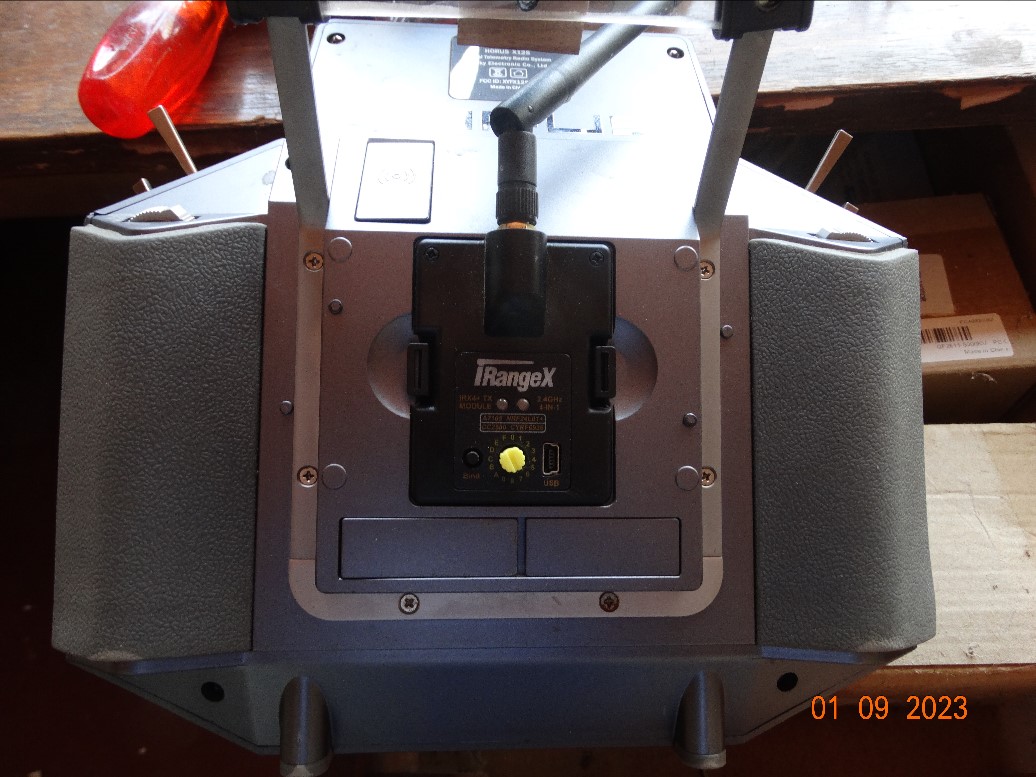
and it goes in here
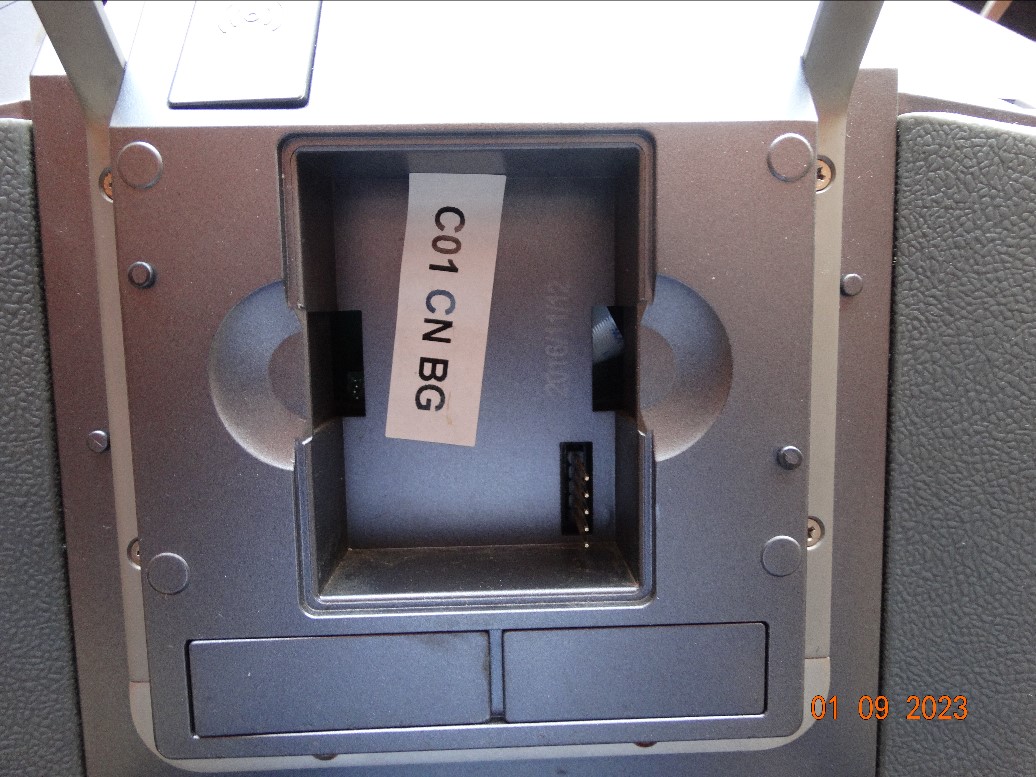
There's also a version that fits Futaba et al
and it goes in here
There's also a version that fits Futaba et al
Do it now, you may never get another chance
Thanks: Flytilbroke
Please Log in or Create an account to join the conversation.
- Dragonfly
- User
-

Less
More
- Thank you received: 0
01 Sep 2023 10:40 #11
by Dragonfly
Replied by Dragonfly on topic Receivers, and Other Questions
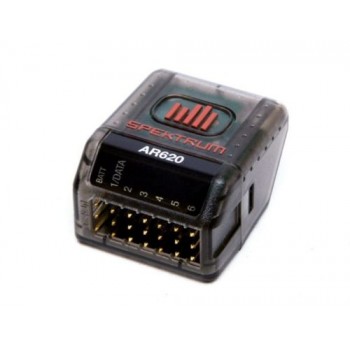
The AR610 are full range Flytillbroke

Please Log in or Create an account to join the conversation.
- Eric
-
- Offline
- Moderator
-
Less
More
- Posts: 13726
- Thank you received: 14470
01 Sep 2023 11:54 - 01 Sep 2023 11:57 #12
by Eric
if you are calm and collected when all about you are going berserk - you've missed something important!
Replied by Eric on topic Receivers, and Other Questions
Pretty much, Paul.
Pick a charger that can charge bigger cell-counts than you think you will need - bigger models often require 4 or 6 cell packs at much higher amp-rates, so if your charger can only 'do' 3 cell 2 amp/hour ( 3s 2000) you will have to buy another bigger one.
As I said, you can get 12v/240v devices, so you can charge at the field. Obtain (scrap-yard) a decent 12v battery to use, rather than your car battery! If you take several batteries, you can fly while you wait for the charger to fill another one.
Be advised that the best charge rate is the one printed on the lipo case ie 3s1800 - takes 1.8 amps or 1800 milliamps (same thing) one hour to charge to full from effectively empty - less than 10%. Go any lower and you risk damaging the pack.
You CAN charge faster, but the pack will get hot, and you will reduce it's working life if you do it too often. (same for running it too low - as the volts drop, the motor/speedo will suck more amps, so the pack gets hotter - up to the point where smething goes pop!
For now, this next bit won't matter to you, as the kit manufacturer has provided the prop, motor, speedo, and I think a battery, so they all match - but when you start experimenting with bigger motors or props, then you need to watch the current draw - (Wattmeter) - or you can destroy the speedo.
It is always advised to have 25% 'head-room' - ie the speedo can deliver 25% more than the motor and prop are asking for.
As a very crude analogy, put a mini engine into a truck, and expect it to go up a steep hill!
if you are calm and collected when all about you are going berserk - you've missed something important!
Last edit: 01 Sep 2023 11:57 by Eric. Reason: added a comment
Thanks: Klipkopwildlife, paulcurtis
Please Log in or Create an account to join the conversation.
- Klipkopwildlife
-
- Offline
- Administrator
-
- I'm supposed to be retired!
01 Sep 2023 12:32 #13
by Klipkopwildlife
Do it now, you may never get another chance
Replied by Klipkopwildlife on topic Receivers, and Other Questions
Don't be confused Paul, Eric uses 'Speedo' (the old word for it) and ESC (Electronic Speed Control) interchangeably, they are the same.
A word about Buddy boxes, Spectrum will only speak to Spectrum, it's to do with a reversed start signal pulse for each control packet. Maybe somebody is now making a gender changer if it turns out you're not getting enough stick time.
As a person who is self taught, don't try, at todays prices you can't afford it.
Many of the 'ready to fly' toys came with their own 2s and 3s charger that charges through the balance plug, if you can find one or two they can help.
Temperature has a huge difference on the charge of a Lipo battery. Do not be tempted to charge at night ready for tomorrow, as the temperature drops the maximum charge voltage of the battery also drops, by the following morning the battery has been seriously over charged for several hours and will have 'puffed'. Performance with that battery will be 'iffy' at best but still okay for testing. Ask me how I know.
Do it now, you may never get another chance
Thanks: paulcurtis
Please Log in or Create an account to join the conversation.
- paulcurtis
- Topic Author
- Offline
- New Member
-
Less
More
- Posts: 7
- Thank you received: 7
01 Sep 2023 14:22 #14
by paulcurtis
Replied by paulcurtis on topic Receivers, and Other Questions
I appreciate all the help, many thanks.
- Flytilbroke - I noted that about the park flyer, but I assumed this referred to the kind of plane rather than the range of the receiver? It does specify 'full range'? I am talking to one of the club experts, but with the greatest respect to him, as with this hobby and other activities, people tend to have their own pet preferences on what should be used, as they have tried and tested stuff and stuck to it, be it plane radio kit, power drill or food processor. A forum like this allows for a range of views, so both sources are useful. I have already sourced a new Spektrum Tx (DX8e) and a used Spektrum buddy box (DX6i), so that's done.
- Klipkopwildlife - thanks, but I have no idea what you are showing in the pics? Thanks for the advice about charging overnight regarding the ambient room temperature.
- Eric - thanks again for that useful information on batteries and chargers. Very good point about future-proofing by getting a 6S charger. Why do chargers allow for discharge? I can understand a storage charge, but otherwise why is there a 'discharge' function?
Thanks: Klipkopwildlife
Please Log in or Create an account to join the conversation.
- Dragonfly
- User
-
Less
More
- Thank you received: 0
01 Sep 2023 14:35 #15
by Dragonfly
Replied by Dragonfly on topic Receivers, and Other Questions
Just noticed i put AR610 instead of ar620 in my post, photo was of the AR620
Please Log in or Create an account to join the conversation.
Time to create page: 1.410 seconds