
- Posts: 9272
- Thank you received: 2167
- Forum
- Forum Categories
- Beginners Category
- RC flying and building for beginners- from a noob! [Banter Allowed]
RC flying and building for beginners- from a noob! [Banter Allowed]
- The Beard
-

- Offline
- Forum Master
-

Less
More
21 Oct 2012 03:41 #16
by The Beard
Replied by The Beard on topic Re: RC flying and building for beginners- from a noob! [Banter Allowed]
I think in our prolonged discussion over grubby screws we both decided that Mpx had modified the type of screw use to adjust the side and down thrust Sarah Jane.It was a matter od elimination and WE decided there was nowhere else for them to go.It wasnt me being stubborn it was you wanting the parts to match the picture that was the problem.Im looking forward to the photos ,then I can put mine up so hurry up.
Please Log in or Create an account to join the conversation.
- Sarah-Jane Smith
-
 Topic Author
- Offline
- Forum Veteran
-

- Gone
Less
More
- Posts: 3094
- Thank you received: 2182
21 Oct 2012 04:56 - 21 Oct 2012 04:59 #17
by Sarah-Jane Smith
I wish I was a glow worm, a glow worm's never glum.
Cos how can you be grumpy when the sun shines out your bum?!
Replied by Sarah-Jane Smith on topic Re: RC flying and building for beginners- from a noob! [Banter Allowed]
No lol lol lol I think the conversation went thus-
"stephen, there ARE no headed screws!"
" sarah, there must be"
" no there isnt"
" yes there is"
"no there b*****y well isnt! ooo hang on i reckon they have swapped them"
" yes there is"
"stephen, will you shut up a minute!!!! I think they have swapped them for 4 grub screws"
silence.................... (theres a first hehe)
" sarah, i reckon you may be right, they have swapped them for grub screws"
thus proving that females are always right and men should listen to them


"stephen, there ARE no headed screws!"
" sarah, there must be"
" no there isnt"
" yes there is"
"no there b*****y well isnt! ooo hang on i reckon they have swapped them"
" yes there is"
"stephen, will you shut up a minute!!!! I think they have swapped them for 4 grub screws"
silence.................... (theres a first hehe)
" sarah, i reckon you may be right, they have swapped them for grub screws"
thus proving that females are always right and men should listen to them
I wish I was a glow worm, a glow worm's never glum.
Cos how can you be grumpy when the sun shines out your bum?!
Last edit: 21 Oct 2012 04:59 by Sarah-Jane Smith.
Please Log in or Create an account to join the conversation.
- SmarTmartY
-
- Offline
- Elite Member
-

Less
More
- Posts: 201
- Thank you received: 78
21 Oct 2012 05:43 #18
by SmarTmartY
Replied by SmarTmartY on topic Re: RC flying and building for beginners- from a noob! [Banter Allowed]
A point to Sarah methinks 
Thanks: Sarah-Jane Smith
Please Log in or Create an account to join the conversation.
- The Beard
-
- Offline
- Forum Master
-
Less
More
- Posts: 9272
- Thank you received: 2167
21 Oct 2012 05:53 #19
by The Beard
Replied by The Beard on topic Re: RC flying and building for beginners- from a noob! [Banter Allowed]
TheThing is Sarah,men are peace makers Marty knows that Im the one who figured it out,you know Im the one that figured it out but we always agree with your summerisation because its the easiest option to take,hence the answer "Oh yes Sarah ,I remeber now your right"But its stll doesnt hide the fact you didnt have a clue what they were for,but the important thing for you---it completed the photograph.But you still had to look them up to ensure Mpx had modified the specification,however--alls well that ends well
Please Log in or Create an account to join the conversation.
- Phil Wood
-

- Offline
- Inactivated User
-

23 Oct 2012 13:54 #20
by Phil Wood
I just own the forum .... you guys make it great thanks.
Replied by Phil Wood on topic Re: RC flying and building for beginners- from a noob! [Banter Allowed]
Here we go again .... I couldn't find a musical smilie 
Sarah ... there are various heads on screws, some are obvious & some are not.
A "Grub" screw usually means one that has no head as such & could in effect fit down a threaded tube..... the method of driving it could be a slot, a cross head, an allen key ... or even a specialist tool.
There is a common misconception that Philips & Posidrive are the same thing.... one is just a cross head .. the other has 4 extra grippy slots.
The idea behind some of these driving mechanisms is that they will limit the torque you can apply before the driver will just "Round out" and push itself out of the screw.
Others (eg Allen screws) will allow you to apply a load of torque without rounding out.
It's not something you'll come across a lot in modelling ..... you just take what you're given & leave the rest to the scientists ..... but not me, I'm on holiday.
Sarah ... there are various heads on screws, some are obvious & some are not.
A "Grub" screw usually means one that has no head as such & could in effect fit down a threaded tube..... the method of driving it could be a slot, a cross head, an allen key ... or even a specialist tool.
There is a common misconception that Philips & Posidrive are the same thing.... one is just a cross head .. the other has 4 extra grippy slots.
The idea behind some of these driving mechanisms is that they will limit the torque you can apply before the driver will just "Round out" and push itself out of the screw.
Others (eg Allen screws) will allow you to apply a load of torque without rounding out.
It's not something you'll come across a lot in modelling ..... you just take what you're given & leave the rest to the scientists ..... but not me, I'm on holiday.
I just own the forum .... you guys make it great thanks.
Thanks: Sarah-Jane Smith
Please Log in or Create an account to join the conversation.
- Sarah-Jane Smith
-
Topic Author
- Offline
- Forum Veteran
-
- Gone
Less
More
- Posts: 3094
- Thank you received: 2182
23 Oct 2012 14:06 - 23 Oct 2012 14:11 #21
by Sarah-Jane Smith
Hahahaha I know about screws its mr fuzzyfeet ya need to point this out to who just would not believe me that these were 6mm grubs (size doesn't matter blah blah blah lol) (men are peace makers, ha! load of b...lalalalalallalal). Marty, I got the point, I won the cup!! hehehehee
Am still reading and writing about engines/motors, bare with me- uni started back up and its a big semester
I wish I was a glow worm, a glow worm's never glum.
Cos how can you be grumpy when the sun shines out your bum?!
Replied by Sarah-Jane Smith on topic Re: RC flying and building for beginners- from a noob! [Banter Allowed]
Polyphilla wrote: Here we go again .... I couldn't find a musical smilie
Sarah ... there are various heads on screws, some are obvious & some are not.
A "Grub" screw usually means one that has no head as such & could in effect fit down a threaded tube..... the method of driving it could be a slot, a cross head, an allen key ... or even a specialist tool.
There is a common misconception that Philips & Posidrive are the same thing.... one is just a cross head .. the other has 4 extra grippy slots.
The idea behind some of these driving mechanisms is that they will limit the torque you can apply before the driver will just "Round out" and push itself out of the screw.
Others (eg Allen screws) will allow you to apply a load of torque without rounding out.
It's not something you'll come across a lot in modelling ..... you just take what you're given & leave the rest to the scientists ..... but not me, I'm on holiday.
Hahahaha I know about screws
its mr fuzzyfeet ya need to point this out to who just would not believe me that these were 6mm grubs (size doesn't matter blah blah blah lol) (men are peace makers, ha! load of b...lalalalalallalal). Marty, I got the point, I won the cup!! heheheheeAm still reading and writing about engines/motors, bare with me- uni started back up and its a big semester
I wish I was a glow worm, a glow worm's never glum.
Cos how can you be grumpy when the sun shines out your bum?!
Last edit: 23 Oct 2012 14:11 by Sarah-Jane Smith.
Please Log in or Create an account to join the conversation.
- The Beard
-
- Offline
- Forum Master
-
Less
More
- Posts: 9272
- Thank you received: 2167
23 Oct 2012 15:26 #22
by The Beard
Replied by The Beard on topic Re: RC flying and building for beginners- from a noob! [Banter Allowed]
I actually asked 4max if they had modified the kit and he didnt know.We decided together that thats what they had done young lady so stop trying to glorify yourself when it was a joint decision as to what Mpx had done.Anyway Ive waited enough for you and Im taking mine to the field and will take photos,the C of G appears just right.
Thanks: Sarah-Jane Smith
Please Log in or Create an account to join the conversation.
- Tom T
-

- Offline
- Elite Member
-
Less
More
- Posts: 312
- Thank you received: 91
23 Oct 2012 21:10 #23
by Tom T
For once you have tasted flight you will walk the earth with your eyes turned skywards, for there you have been and there you will long to return.
Replied by Tom T on topic Re: RC flying and building for beginners- from a noob! [Banter Allowed]
How have I only just noticed this thread? hmm, shows using my eyes now an again could help! 
Hmm.. i will be watching closely, I am still learning things myself so would be interesting to see peoples ideas and viewpoints...
Hmm.. i will be watching closely, I am still learning things myself so would be interesting to see peoples ideas and viewpoints...
For once you have tasted flight you will walk the earth with your eyes turned skywards, for there you have been and there you will long to return.
Thanks: Sarah-Jane Smith
Please Log in or Create an account to join the conversation.
- Sarah-Jane Smith
-
Topic Author
- Offline
- Forum Veteran
-
- Gone
Less
More
- Posts: 3094
- Thank you received: 2182
25 Oct 2012 00:51 - 25 Oct 2012 01:14 #24
by Sarah-Jane Smith
I wish I was a glow worm, a glow worm's never glum.
Cos how can you be grumpy when the sun shines out your bum?!
Replied by Sarah-Jane Smith on topic Re: RC flying and building for beginners- from a noob! [Banter Allowed]
2. The different ways to power your RC plane for noobies
To IC or not to IC - that is the question………… and one that is guaranteed to start up one heck of a debate should you walk into a forum and ask “Which is best, IC or electric?” May I suggest you then dive quickly behind the sofa to watch the debate unfold from a safe place, or grab your hairdryer and go 10 paces before blasting it at the lawnmowers!!
To a beginner its simple, you want to learn to fly, end of, and that takes priority so for me personally I just wanted to KISS- no not smooch , Keep It Simple Silly. What is IN the plane well, that’s something the man in the shop will sort out right? Ermmmmmmm……………noooooo as I learnt  !
!
So what are we talking about when we say slope-soaring, gliding, IC and electric? Basically, in a nut shell, you have a few ways of powering your plane and I am going to concentrate on 3 basic ways, leaving the jet, turbo, EDF stuff to the experts to explain!!
Gliders for example can have no power, relying on the thermals or slopes to gain height, but they can be electrically assisted. However this can cause problems as a lot of sites specify NO engines/motors for various reasons- such as natural beauty spots, farming land, etc plus its another dive behind the sofa question. I made the mistake of going into a glider specific forum and saying “ a glider style plane with an motor” and only just escaped with my life hehe.
Electric powered models can have either brushless or brushed motors or EDF’s (electric ducted fans) all powered by batteries or LIPOS (short for lithium polymer batteries ). IC- or an “Internal Combustion” which are usually piston and cylinder engines and are also sometimes referred to as glow or nitro engines, which work by burning a liquid fuel called methanol. You can also get turbine engines which are another form of IC but for the purpose of the nooby am going to only discuss the basics of electric v engine simplistically
Gliders - slope soaring
Is basically motor less thus making it one of the relatively cheaper forms of RC as there is no expensive engine to kit out. In Slope soaring the plane is kept airborne by the lift generated when the wind blows onto the face of a hill or cliff, with this air being stopped by the impenetrable cliff/hill it has no where to go but upwards and over giving you a band of air and lift for the plane to fly in. However, the size and shape of the hill and any terrain in front can alter the wind strength and you are relying on there being good wind conditions.
Gliders - thermal
For gliding with lift sources other than a hill, you are relying on thermals. This is where certain areas of ground get warmer from the sun and heat up the air above which then rises causing a bubble of warmer air called a thermal to break away from the ground and rise, and this gives the glider an upward lift that you can pilot your plane in, usually circling to stay within the rising air. You can 'hop' from thermal to thermal, to allow the plane to stay airborne for a long time.
Pros and cons of glider power?
Pros – slower, so easier to control and more relaxing , quiet and there are no messy engine/complicated electrics. Providing you can find thermals or up-drafts you can keep flying for hours.
Cons - you are relying on thermals and up-drafts and although this can be got around with the use of an electric motor and folding propeller as a way of kick starting a climb, or to be used when you run out of updrafts, as I said before, some land owners of local slopes forbid the use of any motor assistance, so you can be limited in flying spot options.
IC- Internal combustion engines
Sometimes called gas, glow, nitro - to KISS- all the same really, all have an engine that relies on the burnt gasses of a fuel to expand and move a piston which in turn moves a rotating crankshaft and in turn drives the planes propeller. Phew!!! With all that work you would expect it to make cup of tea at the same time! The fuel used usually has a methanol base, with different amounts of nitromethane (hence the ref to nitro) added to increase the energy that the fuel can provide, oil is mixed into the fuel to lubricate and protect the engine (I only wanted a cup of tea!). The glow part referred to is the plug used. Instead of a spark plug found in petrol engines a glow plug is used, which once kick started, by a battery, becomes a heated element with a steady glow instead of a spark that causes the fuel to burn (still waiting for it to brew grr).
There are 2 types of engines- 2 stroke and 4 stroke. 2 stroke basically just means the engine ignites/fires on every second stroke of the piston, and on every fourth stroke on a 4 stroke engine, which therefore sounds quieter than a 2 stroke and does have a more realistic sound. However it has more tricky parts that need adjusting, and is more fuel-efficient and also more expensive- and…….it doesn’t brew tea, so it was out the window for me! .
Oh, there is a third engine too but am not going to discuss the Wankel engine- am sorry, much as have tried I can NOT keep a straight face when researching that one BUT it is apparently a no-stroke, because the piston doesn't go up and down in a cylinder (bites lip, bites lip, slaps self, bites lip!). Will leave you to look that one up 
Pros and cons of the IC?
There can be restrictions as to where you can fly, With electric you can fly pretty much anywhere within reason but with IC you may find that only your local model flying club will be able to facilitate your flying, and even some of those restrict the use of IC, due to the noise, to limited times and days. However that pro can also be a con in introducing you to the social side of RC flying.
IC is a lot messier, you need a lot more equipment and the engine needs fiddling about with, and maintenance. But that means you can get up close and personal with your plane, get your hands in, get em dirty, and learn more about how it ticks - oooo lala!
Personally? Although I am in no way mechanically minded the sound of the engine will eventually draw me into trying IC- I could sit and listen to the planes in the air all day so at some point even I will be getting me hands in there for a good grope of a 2 stroke (engine!!!!!!!)
Electric-
A motor and a battery (lipo) uses the conversion of the chemical energy that is in the lipo into a mechanical energy- ie motion and flight! The electrical current in the battery flows into electromagnet coils which are repelled or attracted by permanent magnets in the motors. That causes the motor to rotate and in order to keep this going, in a nice smooth rotational movement, the magnets must continue to be repelled or attracted to the electromagnets, which is done by the repetitive switching of the polarities of the electromagnets, and voila we can fly!!
You can have a brushed or a brushless motor, the brushed just basically means the polarities are switched mechanically by brushes that slide on a commutator inside the motor, and in brushless motors it’s done electronically using a special voltage regulator or speed controller. This still doesn’t make a brew either, so don’t get too excited!
Pros and cons of electric?
Can be a lot cheaper to buy and maintain (though some lipo packs can be expensive) and as a beginner the initial layout and availability of equipment is easier and cheaper. The models are quieter, cleaner, and easier to fix when broken - which is a very good advantage cos as a noob the chances are that you are going to break it a LOT to start with lol.
Cons, you don’t have to join a club with electric, which can have the downfall of not having that social aspect of IC, you can add sound with the use of an RC sound module- sound card, amplifier and speaker, fitted inside your plane to give it that authentic engine sound. Have yet to hear one so am not going to comment on whether it is any good. Another con, it doesn’t make a cup of tea either!!!!!
To sum up, as a nooby, there is no hard and fast rule as to which to go for- IC, electric, glider/slope soaring- it is going to be a personal choice and you can actually mix and match. For me, brand new to this and wanting to learn to fly first before I start to tinker with the innards, it was electric that won the vote. Easier to understand, less mess and fuss and I can learn as I go along. However, I have a love of the sound of planes and having spent the weekend at Ashbourne listening to those IC's, I will give it a go. For now am just happy pottering about and waiting for my initiation tutu which is compulsory wearing on this forum as an elecky flyer– btw, what do the gassers/petrol heads wear? hehe
references- There is nothing new really to be discovered about RCplanes and the web is full of information however these are just some of the websites I have READ only in order to understand and be able to write about the above.
EasyRC.com (1994-2012).R/C Engines Made Easy. Retrieved 24th October 2012, from www.easyrc.com/engines/index.html
Nitrotek (2011). Tips For Buying Your First RC Plane Or Helicopter. Retrieved 24th October 2012, from www.nitrotek.co.uk/articles/Tips-For-Buy...ne-Or-Helicopter.php
RC Airplane Advisor (2005-2012).Model Airplane Engines. Retrieved 24th October 2012, from www.rc-airplane-advisor.com/model-airplane-engines.html
RC Airplane World (2012).Model Airplane Engines. Retrieved 24th October 2012, from www.rc-airplane-world.com/radio-control-gear.html
Wikipedia (2012). Wankel engine. Retrieved 24th October 2012, from en.wikipedia.org/wiki/Wankel_engine
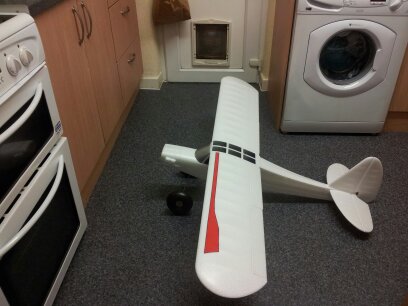
next installment (in about 10 years at this rate lol) will talk about the different materials and you can meet my plane, hehe- here is a snippet so far as she looks
To IC or not to IC - that is the question………… and one that is guaranteed to start up one heck of a debate should you walk into a forum and ask “Which is best, IC or electric?” May I suggest you then dive quickly behind the sofa to watch the debate unfold from a safe place, or grab your hairdryer and go 10 paces before blasting it at the lawnmowers!!
To a beginner its simple, you want to learn to fly, end of, and that takes priority so for me personally I just wanted to KISS- no not smooch
, Keep It Simple Silly. What is IN the plane well, that’s something the man in the shop will sort out right? Ermmmmmmm……………noooooo as I learnt !So what are we talking about when we say slope-soaring, gliding, IC and electric? Basically, in a nut shell, you have a few ways of powering your plane and I am going to concentrate on 3 basic ways, leaving the jet, turbo, EDF stuff to the experts to explain!!
Gliders for example can have no power, relying on the thermals or slopes to gain height, but they can be electrically assisted. However this can cause problems as a lot of sites specify NO engines/motors for various reasons- such as natural beauty spots, farming land, etc plus its another dive behind the sofa question. I made the mistake of going into a glider specific forum and saying “ a glider style plane with an motor” and only just escaped with my life hehe.
Electric powered models can have either brushless or brushed motors or EDF’s (electric ducted fans) all powered by batteries or LIPOS (short for lithium polymer batteries ). IC- or an “Internal Combustion” which are usually piston and cylinder engines and are also sometimes referred to as glow or nitro engines, which work by burning a liquid fuel called methanol. You can also get turbine engines which are another form of IC but for the purpose of the nooby am going to only discuss the basics of electric v engine simplistically
Gliders - slope soaring
Is basically motor less thus making it one of the relatively cheaper forms of RC as there is no expensive engine to kit out. In Slope soaring the plane is kept airborne by the lift generated when the wind blows onto the face of a hill or cliff, with this air being stopped by the impenetrable cliff/hill it has no where to go but upwards and over giving you a band of air and lift for the plane to fly in. However, the size and shape of the hill and any terrain in front can alter the wind strength and you are relying on there being good wind conditions.
Gliders - thermal
For gliding with lift sources other than a hill, you are relying on thermals. This is where certain areas of ground get warmer from the sun and heat up the air above which then rises causing a bubble of warmer air called a thermal to break away from the ground and rise, and this gives the glider an upward lift that you can pilot your plane in, usually circling to stay within the rising air. You can 'hop' from thermal to thermal, to allow the plane to stay airborne for a long time.
Pros and cons of glider power?
Pros – slower, so easier to control and more relaxing , quiet and there are no messy engine/complicated electrics. Providing you can find thermals or up-drafts you can keep flying for hours.
Cons - you are relying on thermals and up-drafts and although this can be got around with the use of an electric motor and folding propeller as a way of kick starting a climb, or to be used when you run out of updrafts, as I said before, some land owners of local slopes forbid the use of any motor assistance, so you can be limited in flying spot options.
IC- Internal combustion engines
Sometimes called gas, glow, nitro - to KISS- all the same really, all have an engine that relies on the burnt gasses of a fuel to expand and move a piston which in turn moves a rotating crankshaft and in turn drives the planes propeller. Phew!!! With all that work you would expect it to make cup of tea at the same time! The fuel used usually has a methanol base, with different amounts of nitromethane (hence the ref to nitro) added to increase the energy that the fuel can provide, oil is mixed into the fuel to lubricate and protect the engine (I only wanted a cup of tea!). The glow part referred to is the plug used. Instead of a spark plug found in petrol engines a glow plug is used, which once kick started, by a battery, becomes a heated element with a steady glow instead of a spark that causes the fuel to burn (still waiting for it to brew grr).
There are 2 types of engines- 2 stroke and 4 stroke. 2 stroke basically just means the engine ignites/fires on every second stroke of the piston, and on every fourth stroke on a 4 stroke engine, which therefore sounds quieter than a 2 stroke and does have a more realistic sound. However it has more tricky parts that need adjusting, and is more fuel-efficient and also more expensive- and…….it doesn’t brew tea, so it was out the window for me! .
Oh, there is a third engine too but am not going to discuss the Wankel engine- am sorry, much as have tried I can NOT keep a straight face when researching that one
BUT it is apparently a no-stroke, because the piston doesn't go up and down in a cylinder (bites lip, bites lip, slaps self, bites lip!). Will leave you to look that one up Pros and cons of the IC?
There can be restrictions as to where you can fly, With electric you can fly pretty much anywhere within reason but with IC you may find that only your local model flying club will be able to facilitate your flying, and even some of those restrict the use of IC, due to the noise, to limited times and days. However that pro can also be a con in introducing you to the social side of RC flying.
IC is a lot messier, you need a lot more equipment and the engine needs fiddling about with, and maintenance. But that means you can get up close and personal with your plane, get your hands in, get em dirty, and learn more about how it ticks - oooo lala!
Personally? Although I am in no way mechanically minded the sound of the engine will eventually draw me into trying IC- I could sit and listen to the planes in the air all day so at some point even I will be getting me hands in there for a good grope of a 2 stroke (engine!!!!!!!)
Electric-
A motor and a battery (lipo) uses the conversion of the chemical energy that is in the lipo into a mechanical energy- ie motion and flight! The electrical current in the battery flows into electromagnet coils which are repelled or attracted by permanent magnets in the motors. That causes the motor to rotate and in order to keep this going, in a nice smooth rotational movement, the magnets must continue to be repelled or attracted to the electromagnets, which is done by the repetitive switching of the polarities of the electromagnets, and voila we can fly!!
You can have a brushed or a brushless motor, the brushed just basically means the polarities are switched mechanically by brushes that slide on a commutator inside the motor, and in brushless motors it’s done electronically using a special voltage regulator or speed controller. This still doesn’t make a brew either, so don’t get too excited!
Pros and cons of electric?
Can be a lot cheaper to buy and maintain (though some lipo packs can be expensive) and as a beginner the initial layout and availability of equipment is easier and cheaper. The models are quieter, cleaner, and easier to fix when broken - which is a very good advantage cos as a noob the chances are that you are going to break it a LOT to start with lol.
Cons, you don’t have to join a club with electric, which can have the downfall of not having that social aspect of IC, you can add sound with the use of an RC sound module- sound card, amplifier and speaker, fitted inside your plane to give it that authentic engine sound. Have yet to hear one so am not going to comment on whether it is any good. Another con, it doesn’t make a cup of tea either!!!!!
To sum up, as a nooby, there is no hard and fast rule as to which to go for- IC, electric, glider/slope soaring- it is going to be a personal choice and you can actually mix and match. For me, brand new to this and wanting to learn to fly first before I start to tinker with the innards, it was electric that won the vote. Easier to understand, less mess and fuss and I can learn as I go along. However, I have a love of the sound of planes and having spent the weekend at Ashbourne listening to those IC's, I will give it a go. For now am just happy pottering about and waiting for my initiation tutu which is compulsory wearing on this forum as an elecky flyer– btw, what do the gassers/petrol heads wear? hehe
references- There is nothing new really to be discovered about RCplanes and the web is full of information however these are just some of the websites I have READ only in order to understand and be able to write about the above.
EasyRC.com (1994-2012).R/C Engines Made Easy. Retrieved 24th October 2012, from www.easyrc.com/engines/index.html
Nitrotek (2011). Tips For Buying Your First RC Plane Or Helicopter. Retrieved 24th October 2012, from www.nitrotek.co.uk/articles/Tips-For-Buy...ne-Or-Helicopter.php
RC Airplane Advisor (2005-2012).Model Airplane Engines. Retrieved 24th October 2012, from www.rc-airplane-advisor.com/model-airplane-engines.html
RC Airplane World (2012).Model Airplane Engines. Retrieved 24th October 2012, from www.rc-airplane-world.com/radio-control-gear.html
Wikipedia (2012). Wankel engine. Retrieved 24th October 2012, from en.wikipedia.org/wiki/Wankel_engine
next installment (in about 10 years at this rate lol) will talk about the different materials and you can meet my plane, hehe- here is a snippet so far as she looks
I wish I was a glow worm, a glow worm's never glum.
Cos how can you be grumpy when the sun shines out your bum?!
Last edit: 25 Oct 2012 01:14 by Sarah-Jane Smith.
Thanks: Klipkopwildlife, blue123
Please Log in or Create an account to join the conversation.
- The Beard
-
- Offline
- Forum Master
-
Less
More
- Posts: 9272
- Thank you received: 2167
25 Oct 2012 05:07 #25
by The Beard
Replied by The Beard on topic Re: RC flying and building for beginners- from a noob! [Banter Allowed]
Coming along slowly I see.Just a point Sarah.You will need 4 bolts to hold the motor to the mount.Your local model shop should be avle to help.take the motor and mount with you,but I think I need to send you the right size mount.
Please Log in or Create an account to join the conversation.
- Garry Pollard
- Visitor
-

25 Oct 2012 14:41 #26
by Garry Pollard
Replied by Garry Pollard on topic Re: RC flying and building for beginners- from a noob! [Banter Allowed]
A well written and reserched article willowlea. I do however have one question. In the pro's and con's of electric, I quote " Con's, you dont have to join a club with electric" You dont Have to join a club with any form of model flying, but it is very advisable, and far less painfull.
Garry
Garry
Please Log in or Create an account to join the conversation.
- The Beard
-
- Offline
- Forum Master
-
Less
More
- Posts: 9272
- Thank you received: 2167
25 Oct 2012 15:30 #27
by The Beard
Replied by The Beard on topic Re: RC flying and building for beginners- from a noob! [Banter Allowed]
But the first step os to join "Modelchat "to get all the advise you need as Sarah did ,hence why her choice of first model was such a gooden
Please Log in or Create an account to join the conversation.
- The Beard
-
- Offline
- Forum Master
-
Less
More
- Posts: 9272
- Thank you received: 2167
25 Oct 2012 17:29 #28
by The Beard
Replied by The Beard on topic Re: RC flying and building for beginners- from a noob! [Banter Allowed]
Ive never been called so many different names changing on a daily basis so much Im beginning to not know who I am who I was and who I soon will be,but i would like to point out that you havent as yest introduced which model you chose and why.
Please Log in or Create an account to join the conversation.
- Sarah-Jane Smith
-
Topic Author
- Offline
- Forum Veteran
-
- Gone
Less
More
- Posts: 3094
- Thank you received: 2182
25 Oct 2012 21:51 - 25 Oct 2012 22:03 #29
by Sarah-Jane Smith
I wish I was a glow worm, a glow worm's never glum.
Cos how can you be grumpy when the sun shines out your bum?!
Replied by Sarah-Jane Smith on topic Re: RC flying and building for beginners- from a noob! [Banter Allowed]
LEGAL/SAFETY CODES OF CONDUCT- in brief
Firstly I would like to add an amendment. On talking to a very nice chap at the BMFA (whom I shall not name, purely because I didn't ask his permission to cite/quote or mention him in this article, however should he wish to comment he is more than welcome to ) I was discussing the ease of use of electric as opposed to IC for a noobie and he came up with what I deem to be a very valid point I hadn’t thought of- the amount of “stick” time ( flying in a nut shell). With electric you don’t get very long unless you have a stack of charged lipos ready in the wings to swap however with IC you can fly, land, refuel and fly again. The amount of time to fly can affect not only your enjoyment but the practice you get and therefore I would like to add this as a pro to IC for noobies. I only opted for electric over IC because for me, personally, it is going to take me a lot longer to understand the workings of IC and would rather fly first and learn the rest as I go along, being of the slightly wooly head when it comes to the technical stuff!
Mr Hairybeardie . You are correct; I have as yet to discuss my model in more depth. HOWEVER there is a very good reason behind that to which I shall endeavour to explain. I am a thorough person, I do not like to jump into anything without being, as much as is possible, aware of as many facts, legalities, pitfalls etc etc that I can be therefore with each step I am researching as much as I can before writing about it and am trying to start from the bottom and work my way up. Plus......................it’s my bloomin thread will write it as I bloomin well like lol!!!! : lol:
Basically, it’s alright for you ‘orrible lot lol!! Those that have been doing this for years have the knowledge on tap, the whole point of this is it’s from a noobie to a noobie- so it’s all noobie stuff. I don't want to just know that the servo you put for the ailerons is the one that "fits in the hole" (that was actually a conversation I had with one of you lol) I want to know WHY the servos are different sizes, powers etc, what difference they make so I can make an informed choice. And if I can convey that in as easy a terminology as I can for another noobie as myself then I am going to give it a shot.
With regards to Garry- you are correct ; there is no specification with regards to having to join a club to fly any RC model. I probably should have worded it better. What I meant, based on the research I had carried out, was that you could ( theoretically) pop up and fly an electric model anywhere but with IC people generally recommended only flying at a club for safety and the noise issue. I was going to go into more detail with regards to legalities and safety in another post at a later date, so this will be brief (ish, lol) as had to do an afternoon of research regarding it I wasn't expecting lol. My apologies if I have omitted anything important, please feel free to add yourselves.
BUT -I, rightly or wrongly, assumed that engines 2 stroke, 4 stroke, jets etc would be MORE dangerous to fly in public places than electric HOWEVER it came to light in my conversation with the gentleman at the BMFA that I had not taken into consideration the dangers that lipos can have in electric models and that if not handled, charged and used correctly can swell up and balloon before eventually bursting into flames with a very powerful explosive detonation. So with any aspect of RC there is a danger and although there is no legal requirement to fly any of the different genres at a club (as opposed to your local playing field) it is highly recommend to do so. Details of clubs nearest to your location can be found on the BMFA website (website link below). Obviously with slope soaring there has to be a slope or hill lol, but again the safety and consideration to other users and landowners need to be adhered to.
I believe it is really important to be fully aware of any facts, legalities, pros and cons of any hobby or endeavour that has the potential to harm others so this afternoon, after Garry’s query, I read up on the BMFA handbook to try to find anything that would stipulate any legal requirement with regards to where you are allowed to fly and where you cant in public places that are NOT designated flying spaces. In a nut shell I couldn’t find anything that said you could not just roll up to your local park and fly any form of RC and that worried me. I thought that there should be something there to protect members of the public and their property from what could be lethal weapons- so I rang the BMFA up to ask them.
Ok for the noobie’s the BMFA is the British Model Flying Association www.bmfa.org/index.html (I do not know of the associations of other countries, so please feel free to post them here anyone who does)
If you haven’t been and had a nosey on their site I highly recommend you do so, its full of great information and is also where you can register and get your insurance sorted if you are not in a club- (I got my BN number today, can I just whoooppppppppppppp! hehe cos I can and its my thread!)
So, the legalities as stipulated in the BMFA can be found in their handbook www.bmfa.org/handbook/HandbookWebVersion2012.pdf
There is also the CAP658 Model Aircraft: A Guide to Safe Flying that can be found at
www.caa.co.uk/docs/33/CAP658.PDF
CAP 393: Air Navigation: The Order and the Regulations
www.caa.co.uk/application.aspx?catid=33&...1&mode=detail&id=226
All the above are documents I would recommend any aspiring noobie AND any already established oldie (sowwie lol want of better word ) read as not only do they give important safety advice but guidelines on clubs, insurance, hazardous materials, how to do safety checks etc. As I said I do want to go into these in more detail at a later stage and I am not going to cite or quote both the above guides entirely as really peeps should go read them themselves. BUT am going to quote directly, and cite, the following 4 IMPORTANT LEGAL REQUIREMENTS as stated in CAP 658, 2012 as I feel they are important. Please note I am not going to discuss FPV (First Person View) as this is covered elsewhere. Or insurance which will cover another time.
The CAA (Civil Aviation Authority) is the UK's specialist aviation regulator and they administer a legal framework called the ANO (Air Navigation Order) that is endorsed by Act of Parliament meaning you are liable to criminal prosecution if found to be in breach of any laws regarding flying made by the above HOWEVER when it comes to RC flying most of the clauses don’t apply but for these following regulations – articles 138,137, 166 and 167 of the ANO 2009 (CAP 658, 2012)
1) Article 138 – Endangering safety of any person or property
“A person must not recklessly or negligently cause or permit an aircraft to endanger
Any person or property.’ All model flying activity is controlled by this article of the ANO and it is important that the operator of any model aircraft should bear this in mind at all times. (CAP 658, 2012)
2) Article 137 – Endangering Safety of an Aircraft
'A person must not recklessly or negligently act in a manner likely to
endanger an aircraft, or any person in an aircraft.'
Article 137 refers to people in an aircraft endangering the aircraft or persons therein,
whereas Article 138 refers to persons outside aircraft endangering aircraft. Obviously
only Article 138 can apply to a model aircraft. technically Article 137 does
apply to models over 20 kg. (CAP 658, 2012)
3) Article 166 – Small unmanned aircraft
(1) A person must not cause or permit any article or animal (whether or not attached
to a parachute) to be dropped from a small unmanned aircraft so as to endanger
persons or property.
(2) The person in charge of a small unmanned aircraft may only fly the aircraft if
reasonably satisfied that the flight can safely be made.
(3) The person in charge of a small unmanned aircraft must maintain direct, unaided
visual contact with the aircraft sufficient to monitor its flight path in relation to
other aircraft, persons, vehicles, vessels and structures for the purpose of
avoiding collisions.
(4) The person in charge of a small unmanned aircraft which has a mass of more than
7 kg excluding its fuel but including any articles or equipment installed in or
attached to the aircraft at the commencement of its flight, must not fly the
aircraft:
(a) in Class A, C, D or E airspace unless the permission of the appropriate air traffic
control unit has been obtained;
(b)within an aerodrome traffic zone during the notified hours of watch of the air
traffic control unit (if any) at that aerodrome unless the permission of any such
air traffic control unit has been obtained; or
(c) at a height of more than 400 feet above the surface unless it is flying in
airspace described in sub-paragraph (a) or (b) and in accordance with the
requirements for that airspace.
(CAP 658, 2012)
4) Article 167 – Small unmanned surveillance aircraft
(1) The person in charge of a small unmanned surveillance aircraft must not fly the
aircraft in any of the circumstances described in paragraph (2) except in
accordance with a permission issued by the CAA.
(2) The circumstances referred to in paragraph (1) are:
(a) over or within 150 metres of any congested area;
(b) over or within 150 metres of an organised open-air assembly of more than
1,000 persons;
(c) within 50 metres of any vessel, vehicle or structure which is not under the
control of the person in charge of the aircraft; or
(d) subject to paragraphs (3) and (4), within 50 metres of any person.
(3) Subject to paragraph (4), during take-off or landing, a small unmanned surveillance
aircraft must not be flown within 30 metres of any person.
(4) Paragraphs (2)(d) and (3) do not apply to the person in charge of the small
unmanned surveillance aircraft or a person under the control of the person in
charge of the aircraft. (5) In this article ‘a small unmanned surveillance aircraft’ means a small unmanned
aircraft which is equipped to undertake any form of surveillance or data
acquisition.’
NOTE: The provision of data solely for the use of monitoring the model is not
considered to be applicable to the meaning of ‘surveillance or data
acquisition’.
In conclusion- use your common sense!!
DON’T fly too close to other people, vehicles, houses, etc
DON’T fly in unsuitable weather
DO be mindful of other people and properlty
DO regard local by laws and get permission of land owners
DO keep your model in a good visiaul line of sight at all times
DO be aware of how safe your equipment is and your own competencies and check regularly.
DO be considerate of the noise that could be judged to be a statutory nuisance
Your actions can jeopordise not only another person/bystander but can also bring into disrepute the hobby so be mindful and considerate of what you do always being conscious of the safety elements and the risks as well as being aware of your own competencies, the equipment you are using and its conditions and with regards to areas of flying use your common sense, be mindful of the affect noise etc may have in any built up areas, don’t intrude on peoples private land without permission of the landowner and always be aware of any bylaws that local councils may have with regards to flying in certain areas.
Am going to end this on a quote from the BMFA Handbook, 2012
“Finally - remember that your attitude to safety can affect the whole image of model flying.
Model flying must not only BE safe - it must be SEEN to be safe.”
Firstly I would like to add an amendment. On talking to a very nice chap at the BMFA (whom I shall not name, purely because I didn't ask his permission to cite/quote or mention him in this article, however should he wish to comment he is more than welcome to
) I was discussing the ease of use of electric as opposed to IC for a noobie and he came up with what I deem to be a very valid point I hadn’t thought of- the amount of “stick” time ( flying in a nut shell). With electric you don’t get very long unless you have a stack of charged lipos ready in the wings to swap however with IC you can fly, land, refuel and fly again. The amount of time to fly can affect not only your enjoyment but the practice you get and therefore I would like to add this as a pro to IC for noobies. I only opted for electric over IC because for me, personally, it is going to take me a lot longer to understand the workings of IC and would rather fly first and learn the rest as I go along, being of the slightly wooly head when it comes to the technical stuff! Mr Hairybeardie
. You are correct; I have as yet to discuss my model in more depth. HOWEVER there is a very good reason behind that to which I shall endeavour to explain. I am a thorough person, I do not like to jump into anything without being, as much as is possible, aware of as many facts, legalities, pitfalls etc etc that I can be therefore with each step I am researching as much as I can before writing about it and am trying to start from the bottom and work my way up. Plus......................it’s my bloomin thread will write it as I bloomin well like lol!!!! : lol: Basically, it’s alright for you ‘orrible lot lol!! Those that have been doing this for years have the knowledge on tap, the whole point of this is it’s from a noobie to a noobie- so it’s all noobie stuff. I don't want to just know that the servo you put for the ailerons is the one that "fits in the hole" (that was actually a conversation I had with one of you lol) I want to know WHY the servos are different sizes, powers etc, what difference they make so I can make an informed choice. And if I can convey that in as easy a terminology as I can for another noobie as myself then I am going to give it a shot.
With regards to Garry- you are correct
; there is no specification with regards to having to join a club to fly any RC model. I probably should have worded it better. What I meant, based on the research I had carried out, was that you could ( theoretically) pop up and fly an electric model anywhere but with IC people generally recommended only flying at a club for safety and the noise issue. I was going to go into more detail with regards to legalities and safety in another post at a later date, so this will be brief (ish, lol) as had to do an afternoon of research regarding it I wasn't expecting lol. My apologies if I have omitted anything important, please feel free to add yourselves.BUT -I, rightly or wrongly, assumed that engines 2 stroke, 4 stroke, jets etc would be MORE dangerous to fly in public places than electric HOWEVER it came to light in my conversation with the gentleman at the BMFA that I had not taken into consideration the dangers that lipos can have in electric models and that if not handled, charged and used correctly can swell up and balloon before eventually bursting into flames with a very powerful explosive detonation. So with any aspect of RC there is a danger and although there is no legal requirement to fly any of the different genres at a club (as opposed to your local playing field) it is highly recommend to do so. Details of clubs nearest to your location can be found on the BMFA website (website link below). Obviously with slope soaring there has to be a slope or hill lol, but again the safety and consideration to other users and landowners need to be adhered to.
I believe it is really important to be fully aware of any facts, legalities, pros and cons of any hobby or endeavour that has the potential to harm others so this afternoon, after Garry’s query, I read up on the BMFA handbook to try to find anything that would stipulate any legal requirement with regards to where you are allowed to fly and where you cant in public places that are NOT designated flying spaces. In a nut shell I couldn’t find anything that said you could not just roll up to your local park and fly any form of RC and that worried me. I thought that there should be something there to protect members of the public and their property from what could be lethal weapons- so I rang the BMFA up to ask them.
Ok for the noobie’s the BMFA is the British Model Flying Association www.bmfa.org/index.html (I do not know of the associations of other countries, so please feel free to post them here anyone who does)
If you haven’t been and had a nosey on their site I highly recommend you do so, its full of great information and is also where you can register and get your insurance sorted if you are not in a club- (I got my BN number today, can I just whoooppppppppppppp! hehe cos I can and its my thread!)
So, the legalities as stipulated in the BMFA can be found in their handbook www.bmfa.org/handbook/HandbookWebVersion2012.pdf
There is also the CAP658 Model Aircraft: A Guide to Safe Flying that can be found at
www.caa.co.uk/docs/33/CAP658.PDF
CAP 393: Air Navigation: The Order and the Regulations
www.caa.co.uk/application.aspx?catid=33&...1&mode=detail&id=226
All the above are documents I would recommend any aspiring noobie AND any already established oldie (sowwie lol want of better word
) read as not only do they give important safety advice but guidelines on clubs, insurance, hazardous materials, how to do safety checks etc. As I said I do want to go into these in more detail at a later stage and I am not going to cite or quote both the above guides entirely as really peeps should go read them themselves. BUT am going to quote directly, and cite, the following 4 IMPORTANT LEGAL REQUIREMENTS as stated in CAP 658, 2012 as I feel they are important. Please note I am not going to discuss FPV (First Person View) as this is covered elsewhere. Or insurance which will cover another time.The CAA (Civil Aviation Authority) is the UK's specialist aviation regulator and they administer a legal framework called the ANO (Air Navigation Order) that is endorsed by Act of Parliament meaning you are liable to criminal prosecution if found to be in breach of any laws regarding flying made by the above HOWEVER when it comes to RC flying most of the clauses don’t apply but for these following regulations – articles 138,137, 166 and 167 of the ANO 2009 (CAP 658, 2012)
1) Article 138 – Endangering safety of any person or property
“A person must not recklessly or negligently cause or permit an aircraft to endanger
Any person or property.’ All model flying activity is controlled by this article of the ANO and it is important that the operator of any model aircraft should bear this in mind at all times. (CAP 658, 2012)
2) Article 137 – Endangering Safety of an Aircraft
'A person must not recklessly or negligently act in a manner likely to
endanger an aircraft, or any person in an aircraft.'
Article 137 refers to people in an aircraft endangering the aircraft or persons therein,
whereas Article 138 refers to persons outside aircraft endangering aircraft. Obviously
only Article 138 can apply to a model aircraft. technically Article 137 does
apply to models over 20 kg. (CAP 658, 2012)
3) Article 166 – Small unmanned aircraft
(1) A person must not cause or permit any article or animal (whether or not attached
to a parachute) to be dropped from a small unmanned aircraft so as to endanger
persons or property.
(2) The person in charge of a small unmanned aircraft may only fly the aircraft if
reasonably satisfied that the flight can safely be made.
(3) The person in charge of a small unmanned aircraft must maintain direct, unaided
visual contact with the aircraft sufficient to monitor its flight path in relation to
other aircraft, persons, vehicles, vessels and structures for the purpose of
avoiding collisions.
(4) The person in charge of a small unmanned aircraft which has a mass of more than
7 kg excluding its fuel but including any articles or equipment installed in or
attached to the aircraft at the commencement of its flight, must not fly the
aircraft:
(a) in Class A, C, D or E airspace unless the permission of the appropriate air traffic
control unit has been obtained;
(b)within an aerodrome traffic zone during the notified hours of watch of the air
traffic control unit (if any) at that aerodrome unless the permission of any such
air traffic control unit has been obtained; or
(c) at a height of more than 400 feet above the surface unless it is flying in
airspace described in sub-paragraph (a) or (b) and in accordance with the
requirements for that airspace.
(CAP 658, 2012)
4) Article 167 – Small unmanned surveillance aircraft
(1) The person in charge of a small unmanned surveillance aircraft must not fly the
aircraft in any of the circumstances described in paragraph (2) except in
accordance with a permission issued by the CAA.
(2) The circumstances referred to in paragraph (1) are:
(a) over or within 150 metres of any congested area;
(b) over or within 150 metres of an organised open-air assembly of more than
1,000 persons;
(c) within 50 metres of any vessel, vehicle or structure which is not under the
control of the person in charge of the aircraft; or
(d) subject to paragraphs (3) and (4), within 50 metres of any person.
(3) Subject to paragraph (4), during take-off or landing, a small unmanned surveillance
aircraft must not be flown within 30 metres of any person.
(4) Paragraphs (2)(d) and (3) do not apply to the person in charge of the small
unmanned surveillance aircraft or a person under the control of the person in
charge of the aircraft. (5) In this article ‘a small unmanned surveillance aircraft’ means a small unmanned
aircraft which is equipped to undertake any form of surveillance or data
acquisition.’
NOTE: The provision of data solely for the use of monitoring the model is not
considered to be applicable to the meaning of ‘surveillance or data
acquisition’.
In conclusion- use your common sense!!
DON’T fly too close to other people, vehicles, houses, etc
DON’T fly in unsuitable weather
DO be mindful of other people and properlty
DO regard local by laws and get permission of land owners
DO keep your model in a good visiaul line of sight at all times
DO be aware of how safe your equipment is and your own competencies and check regularly.
DO be considerate of the noise that could be judged to be a statutory nuisance
Your actions can jeopordise not only another person/bystander but can also bring into disrepute the hobby so be mindful and considerate of what you do always being conscious of the safety elements and the risks as well as being aware of your own competencies, the equipment you are using and its conditions and with regards to areas of flying use your common sense, be mindful of the affect noise etc may have in any built up areas, don’t intrude on peoples private land without permission of the landowner and always be aware of any bylaws that local councils may have with regards to flying in certain areas.
Am going to end this on a quote from the BMFA Handbook, 2012
“Finally - remember that your attitude to safety can affect the whole image of model flying.
Model flying must not only BE safe - it must be SEEN to be safe.”
I wish I was a glow worm, a glow worm's never glum.
Cos how can you be grumpy when the sun shines out your bum?!
Last edit: 25 Oct 2012 22:03 by Sarah-Jane Smith.
Thanks: Quorneng
Please Log in or Create an account to join the conversation.
- Quorneng
-

- Offline
- Forum Master
-
Less
More
- Posts: 10058
- Thank you received: 19043
25 Oct 2012 23:20 - 25 Oct 2012 23:21 #30
by Quorneng
Replied by Quorneng on topic Re: RC flying and building for beginners- from a noob! [Banter Allowed]
A bit disappointed that the nice chap from the BMFA pointed out that a LiPo can burst into flames and explode without saying that IC engine fuel can do exactly the same thing.
"No smoking in the pits" is not there because of LiPos!
"No smoking in the pits" is not there because of LiPos!
Last edit: 25 Oct 2012 23:21 by Quorneng.
Please Log in or Create an account to join the conversation.
- Forum
- Forum Categories
- Beginners Category
- RC flying and building for beginners- from a noob! [Banter Allowed]
Time to create page: 0.260 seconds