
Sopwith Pup - Scale 20", rubber-powered.
- one tenor
-

- Offline
- Forum Veteran
-

- johnpcalex@gmail.com
Anything will fly given enough power
Please Log in or Create an account to join the conversation.
- Crashrr
-
 Topic Author
- Offline
- Senior Member
-

- Posts: 87
- Thank you received: 284
'What the hell' is always the right answer...
Please Log in or Create an account to join the conversation.
- one tenor
-
- Offline
- Forum Veteran
-
- johnpcalex@gmail.com
Anything will fly given enough power
Please Log in or Create an account to join the conversation.
- Crashrr
-
Topic Author
- Offline
- Senior Member
-
- Posts: 87
- Thank you received: 284
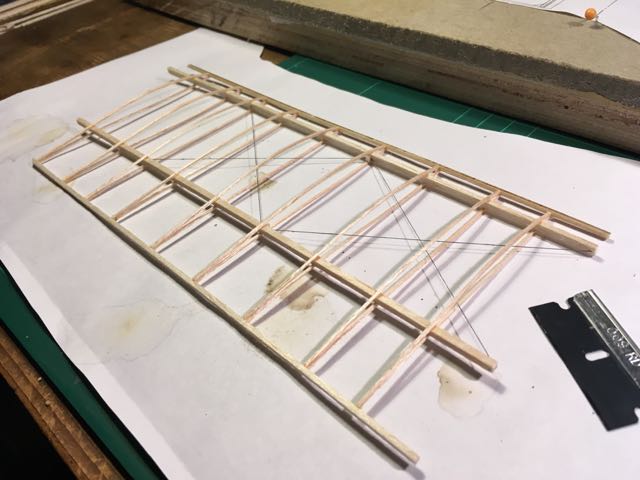

My balsa bending skills continue to improve, and my hot chisel is working well.

I've also started on the fuselage, which has been a joy, especially making the asymmetric stringers.
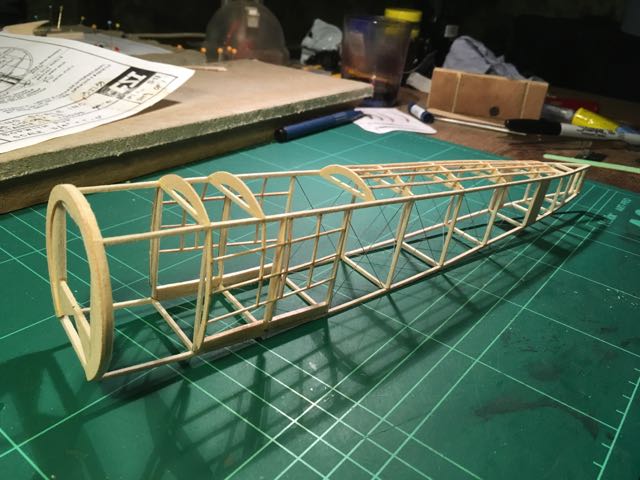

More as it comes off the board...
Crashrr
'What the hell' is always the right answer...
Please Log in or Create an account to join the conversation.
- Squirrelnet
- Offline
- Elite Member
-

- Posts: 754
- Thank you received: 2067
Please Log in or Create an account to join the conversation.
- Ex-Member
- User
-

- Thank you received: 0
Just "wow"
Tony B
Please Log in or Create an account to join the conversation.
- boz
-

- Offline
- Platinum Member
-

- Posts: 1176
- Thank you received: 1420
Please Log in or Create an account to join the conversation.
- Crashrr
-
Topic Author
- Offline
- Senior Member
-
- Posts: 87
- Thank you received: 284
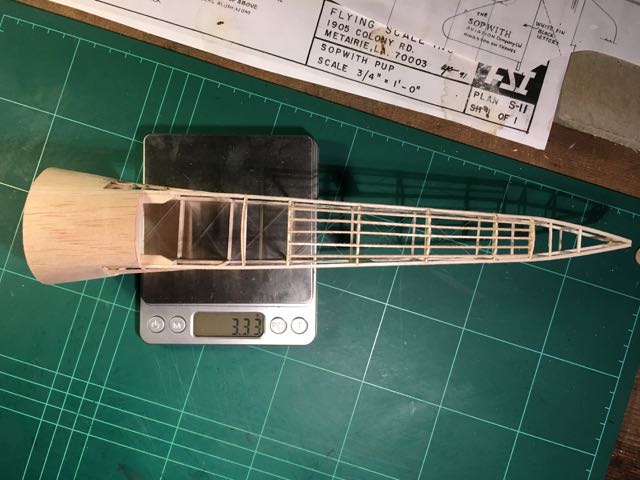
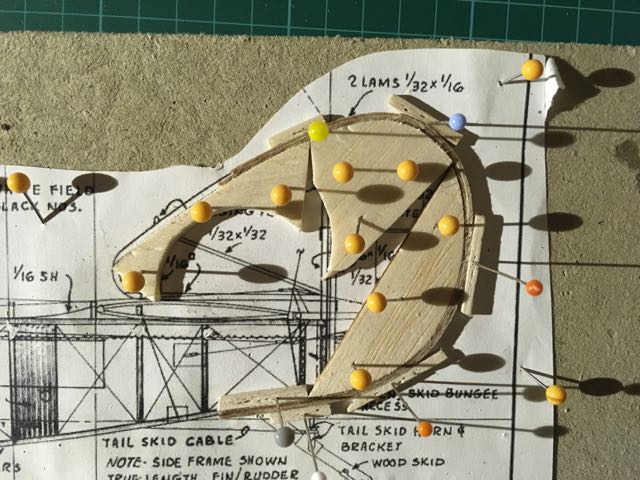
and, for light relief, started playing around with the engine. The Gnome engine has very fine cooling fins and I had no idea how to build these convincingly. So, just for a 'laugh', I tried wrapping silver thread around a bit of balsa and Blimey, it looks great! So, I'm going to try it with hollow rolled paper cylinders painted gloss black. Here's a photo of the first attempt.
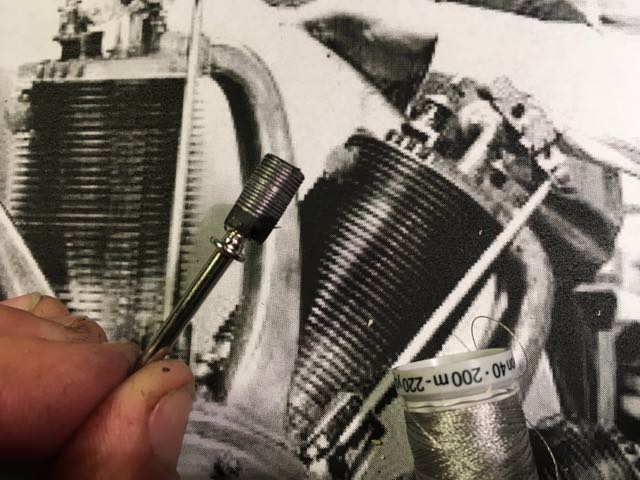
That's all for now, except to say that, since I like having two projects on the go at once, today I am going to get some plans printed of Dave Rees's 30" Lockheed Vega. This, I hope, will be my first really serious flying machine...
Crashrr.
'What the hell' is always the right answer...
Please Log in or Create an account to join the conversation.
- boz
-
- Offline
- Platinum Member
-
- Posts: 1176
- Thank you received: 1420
Please Log in or Create an account to join the conversation.
- Quorneng
-

- Offline
- Forum Master
-

- Posts: 9436
- Thank you received: 19043
Very nice.
Thread wrapped around paper tubes works well.
This is a Le Rhone( or Oberursel) depending on which side you flew!
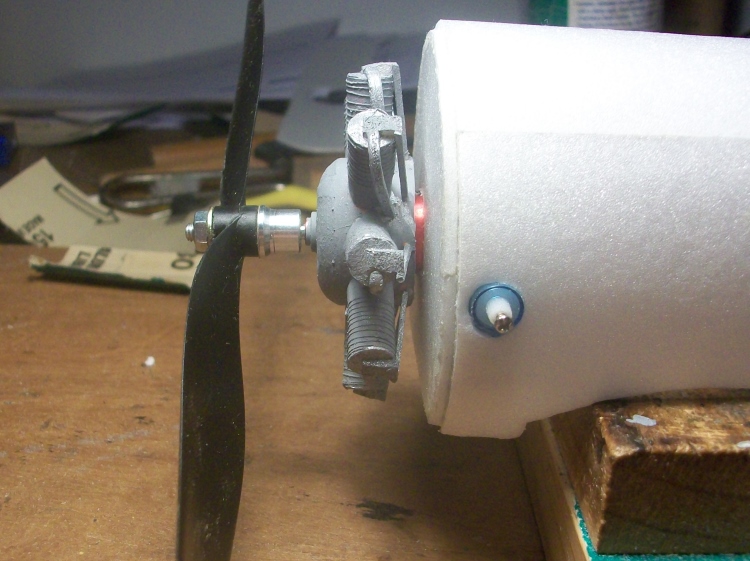
Now if it is electric and the out runner bell doubles as the crankcase then it all goes round with the prop like a true rotary!

Please Log in or Create an account to join the conversation.
- Crashrr
-
Topic Author
- Offline
- Senior Member
-
- Posts: 87
- Thank you received: 284
Yes, a rotating engine would be THE BEST! And how I have thought long and hard about it. Thus far, with no success. The problem is the length of the prop wire: unless I can brace it just behind the prop it will spin out with centrifugal force and rip the front apart! I have thought that it may be possible to make a brace, with, say, three thin strong wires attached to the cowl, but then the cowl would have to be made strong enough to take that extra force... I could try to make the cylinders spin where they meet the central engine hub - allowing me to keep the hub as solid noseblock, but then I'd probably need a ball race to overcome the greater friction of the wider circumference...
I haven't completely given up on it, but suspect that it's a detail for another (electric?) kite. There's another problem to take into account: nose weight. I am probably going to have to add considerable ballast to get the CoG correct. Obviously, the further forward I can site that weight the better. So, depending on how severe that problem is, I'm thinking I can either, stuff the bottom engine cylinder/s with ballast or, make a thin lead 'coin' with a hole to replicate the front engine plate - can't get much further forward than that - except in the very edge of the cowl, but that takes us back to a strong cowl... So, trying to find a forward location to place weight and have a spinning engine behind is a big engineering challenge. (To me.)
It still bugs me, though!
Crashrr
'What the hell' is always the right answer...
Please Log in or Create an account to join the conversation.
- Crashrr
-
Topic Author
- Offline
- Senior Member
-
- Posts: 87
- Thank you received: 284
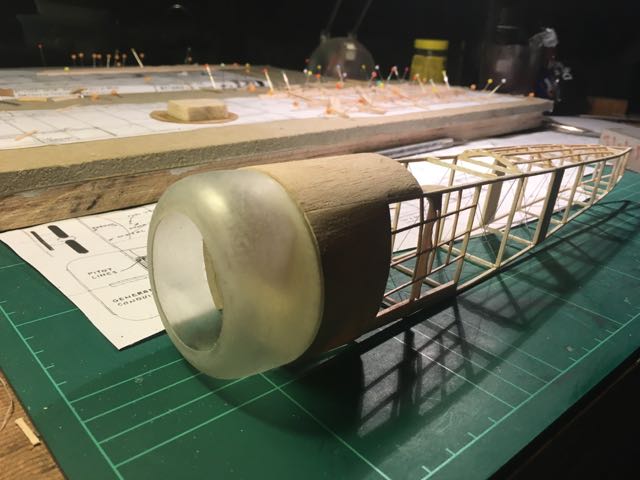
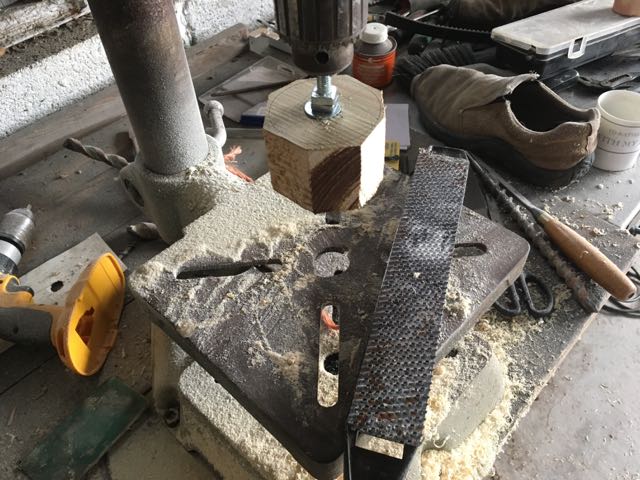
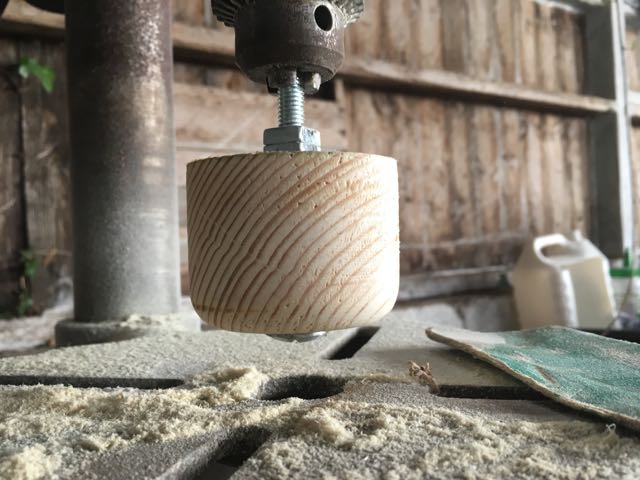
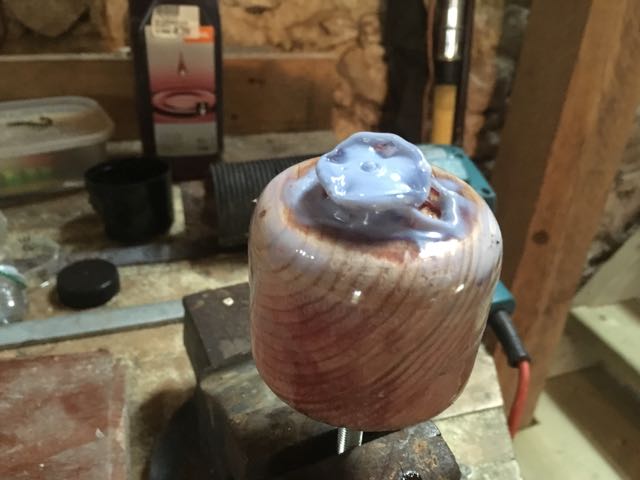
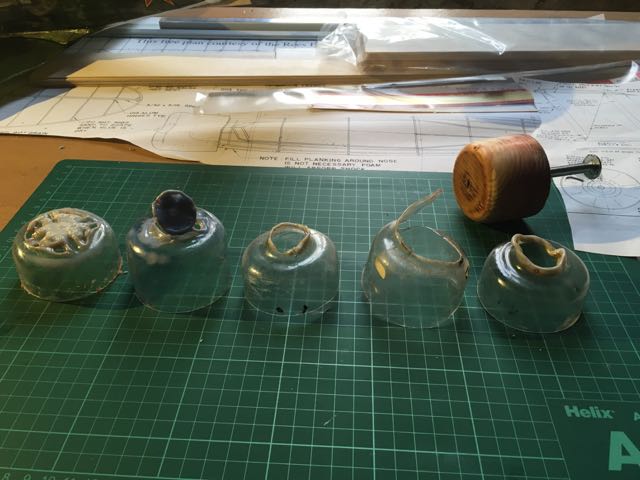
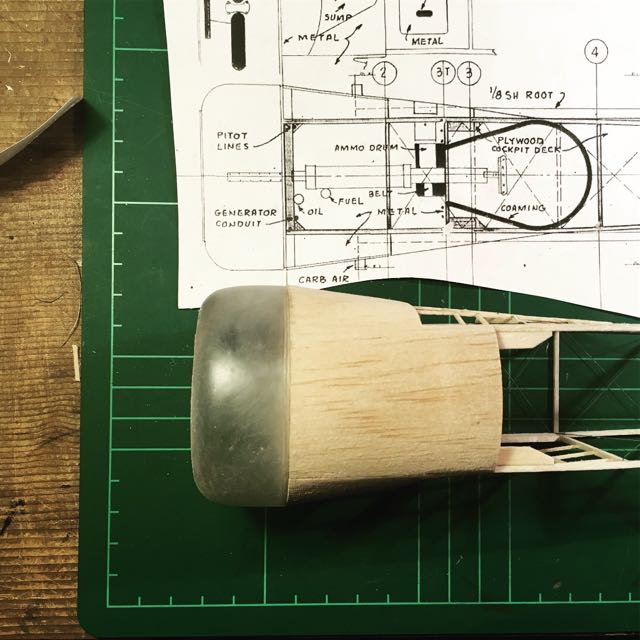
I made a wooden mould on my pillar drill - managed to smack myself in the face with the surform when it jammed on a knot... Ouch, fat lip. My first attempt turned out marginally too small, so back to do another one. This time I selected a piece of wood that didn't have any knots in it!
Making the mould was the hardest part, the heat-shrinking is actually very easy. I used 2-stroke oil as a releasing agent and it went pretty much according to plan. In the end it took me five attempts to get a decent cowl. It can be a bit tricky getting the plastic off the mould, and that fact that my mould had an imperceptible waistline, didn't help! Pleasantly surprised with the end result, and good to know I've now got a new, and very useful skill.
I can't recommend this process enough, it's so rewarding to make something that looks like it's come out of a box. Try it!
Crashrr


'What the hell' is always the right answer...
Please Log in or Create an account to join the conversation.
- boz
-
- Offline
- Platinum Member
-
- Posts: 1176
- Thank you received: 1420

Please Log in or Create an account to join the conversation.